Running physical product offers through an affiliate network is familiar: you choose an offer, drive traffic and receive a payout for an approved lead. In dropshipping, you are the seller. You set the product markup yourself, customers' money goes into your account, and you keep the customer database, which you can use to generate repeat sales. There's plenty of room in the market: according to Shopify's estimate, its value could exceed $476 billion in 2026.
But you also have more responsibilities: managing the store, communicating with customers, handling returns and chargebacks. You'll also need to figure out how to accept payments before launching, because Shopify Payments doesn't operate in CIS countries.
Let's look at how to choose products and where to find suppliers, which ad creatives convert, how to set up payments on Shopify, and which traffic sources and GEOs are best to target.
How dropshipping differs from physical product affiliate marketing
With physical product offers through an affiliate network, you're only responsible for traffic. In dropshipping, you're the intermediary between the supplier and the buyer, and the entire process from click to delivery is your responsibility. That's why the business works differently:
-
Upfront payment. Traditional dropshipping works on a prepaid basis: the buyer pays by card directly on the website, without phone calls or confirmations.
-
Working capital. You pay the supplier for every order, but customers' payments don't reach you immediately. Payment providers may also hold part of a new store's payouts in reserve. So your budget needs to cover not only advertising but also order fulfillment until payouts start arriving consistently.
-
Returns and chargebacks. If the wrong product arrives, or nothing arrives at all, and customer support doesn't respond, the buyer opens a dispute with their bank. The money is deducted from you, not the supplier. If there are too many disputes, the payment provider may freeze your payouts or ban your account.
-
Store and customer support. The website, shipping and return policy pages, and responses to customers are also your responsibility. You can use response templates, but the main thing is to reply quickly.
There's also a model closer to traditional physical product affiliate marketing — COD dropshipping (cash on delivery). It's used in countries where people don't trust online card payments: the Middle East, North Africa and Latin America. This model requires your own operators to confirm orders and local delivery services, while earnings depend on how many customers actually accept and pay for their orders. That's a separate, extensive topic, so the rest of this article will focus on traditional prepaid dropshipping on Shopify.
Where to find trending products
Free tools will show you plenty of ads, but you'll have to filter out weak ones manually. That's why it's better not to save money on spy tools when starting out: a monthly subscription costs less than one failed test, while sorting by engagement and ad runtime immediately filters out discontinued and poorly performing ads.
Free sources:
-
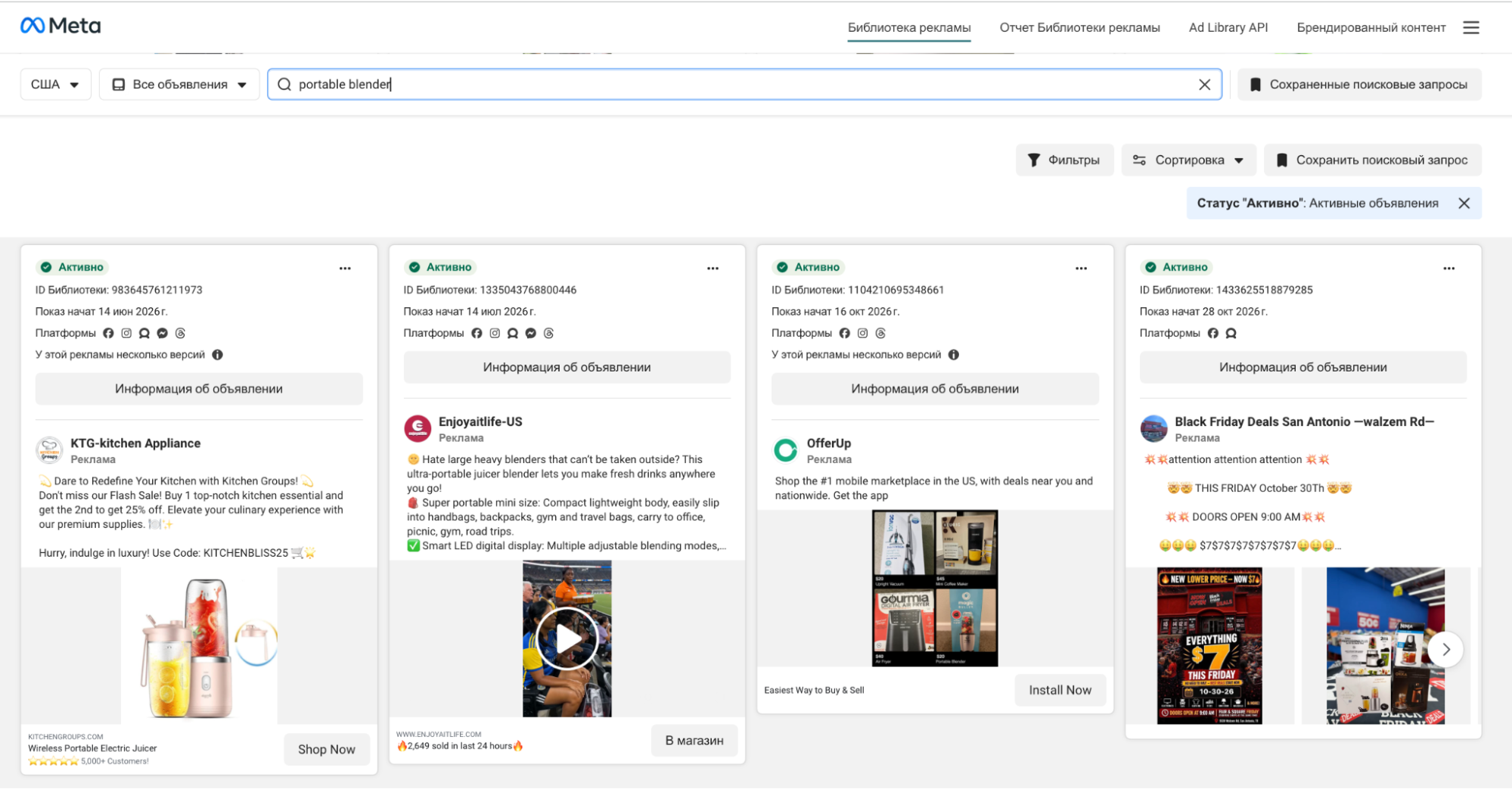
Facebook Ad Library. Choose a GEO and enter phrases commonly found in dropshipping ads: free shipping, 50% off, limited stock. Pay attention to ads that have been running for a long time and have several creative variations. If a seller keeps running ads and producing new creatives, the product is most likely selling well.
-
TikTok Creative Center, Top Products section. This section features products that appear most frequently in TikTok ads, with filters by country and category, plus video examples. It's only accessible on a computer after logging into a TikTok for Business account.
-
Amazon Movers & Shakers. Products showing the fastest sales growth over the past 24 hours.
-
Google Trends. Helps determine whether interest in a product is growing or it's just a temporary spike, and whether demand is seasonal.
Paid spy tools:
-
PiPiADS: advertising on TikTok and Facebook;
-
Minea: Facebook, TikTok and Pinterest in one dashboard;
-
Dropship.io: tracks Shopify stores and estimates their revenue, allowing you to see which products are actually selling for competitors.
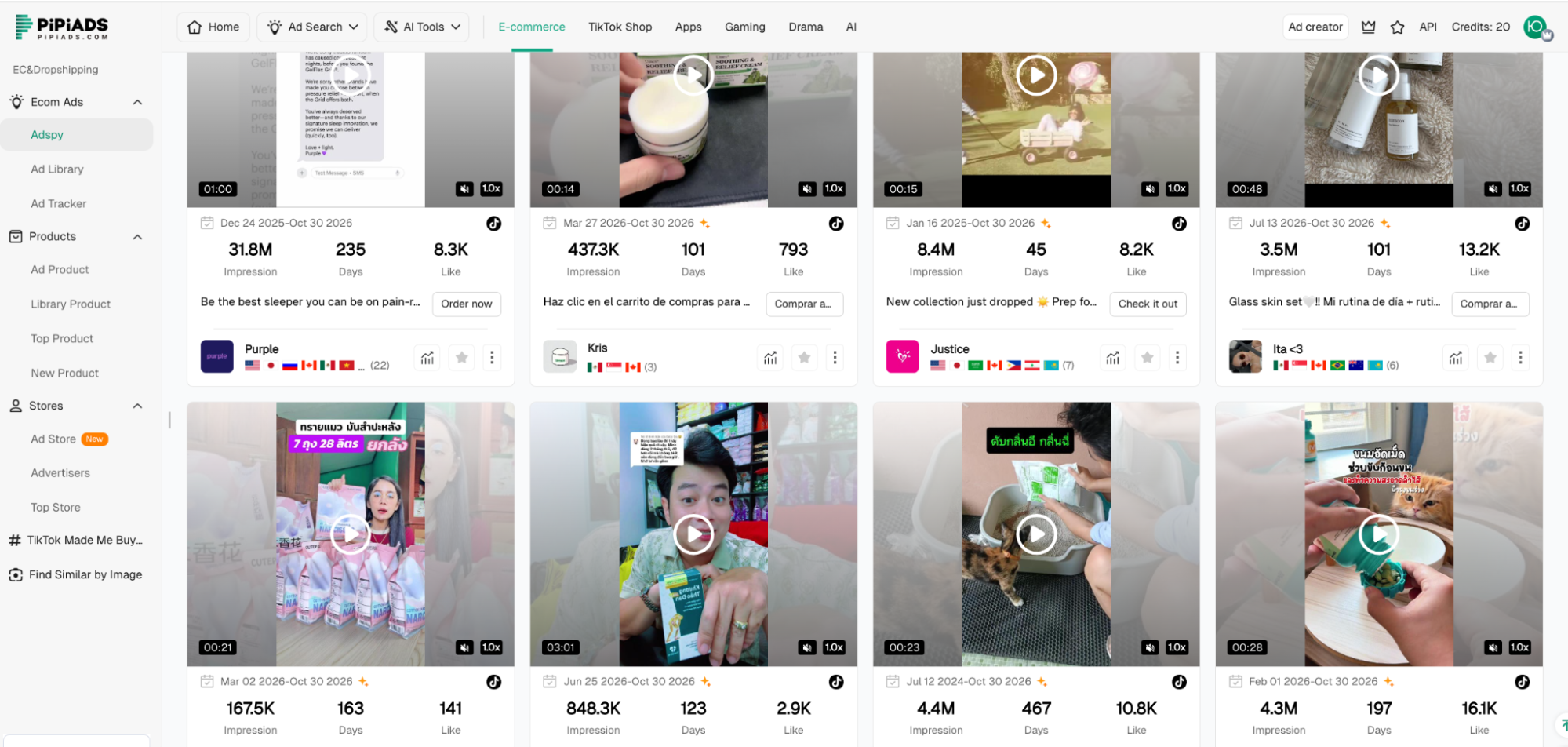
The best time to enter the market — is when a product is already trending on Amazon or in Top Products, but there are still few ads for it in Ad Library. Demand is confirmed, while competition is still relatively low.
How to tell if a product is suitable for dropshipping:
-
Its benefits or wow factor are visible within the first few seconds of a video.
-
It isn't sold in every supermarket. Otherwise, buyers won't want to wait for delivery.
-
You can set the selling price at least 2.5–3 times higher than the purchase price; otherwise, advertising costs and fees will eat up your margin.
-
It's lightweight, doesn't break easily and doesn't require size selection: fewer returns and disputes.
-
It's unbranded. Replicas and other companies' logos can get both your ad account and payment account banned.
Signs that a product is oversaturated:
-
Every store uses the same videos and almost identical prices. The advertising approach is exhausted, not necessarily the product itself. You can still promote it with your own creative or in a GEO where it isn't advertised as heavily.
-
People in the comments say the same product costs several times less on AliExpress. The audience already knows the real price, and a new creative won't help. It's better to skip this product.
-
Old ads are being turned off, and almost no new ones appear. Demand is declining, and it's too late to enter the market.
You can check all of this in Ad Library before launching, which is cheaper than finding out during testing.
Examples of ad creatives
Polished studio videos convert worse in dropshipping than simple smartphone videos. Users scroll through their feeds and skip anything that looks like advertising. That's why most successful creatives are filmed to look like ordinary posts: without professional lighting, tripods or voice-over narration.
Approaches most commonly found in Ad Library among ads that have been running for weeks:
-
Product demonstration. Someone picks up the product and shows how they use it. This works for anything where the effect is immediately visible or the process itself looks unusual: a portable blender that makes smoothies directly in the bottle, a kitchen spoon with built-in scales, or a smart water bottle that lights up and reminds you to drink water.

-
Problem → solution. The first few seconds show a familiar problem: your coffee goes cold while you're distracted, crumbs and dust collect in the gaps of your car's interior, or cables on your desk get tangled and fall to the floor. Then the product appears and solves the problem: a heated mug that keeps drinks hot, a mini car vacuum cleaner or magnetic cable holders.

-
Before and after. Works for cleaning products, personal care products and anything that changes the appearance of an object or person. Make sure the «after» result is achievable: if the effect is exaggerated, returns and disputes increase.

-
Unboxing. A package arrives, someone shares their first impression and immediately tries the product. It takes just a couple of minutes to film and looks like an ordinary customer video.
-
Comparison. The product is compared with an expensive alternative or a conventional method: «Why pay $200 when you can…». It's better not to show other brands' names in the video.
-
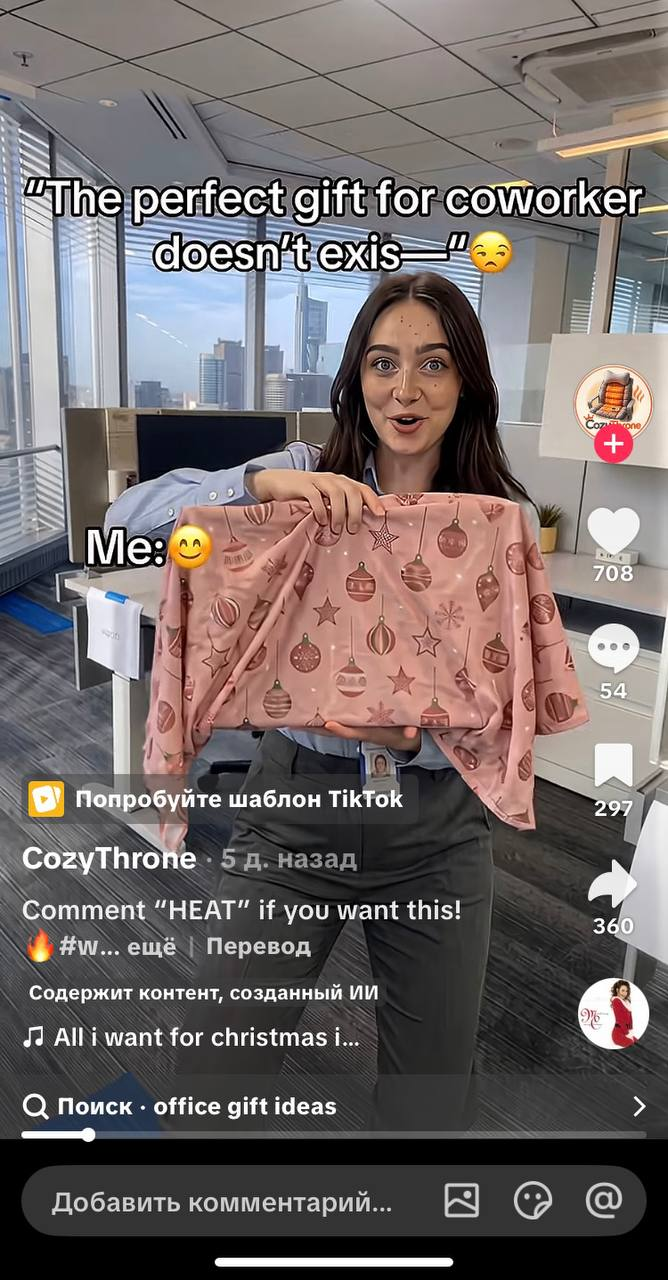
Reaction. The product is given as a gift or shown to another person, and their reaction is filmed. This works well during the gift-giving season.

-
First-person review. Someone talks directly to the camera about how they use the product, what they liked and what they didn't. Mentioning a small drawback in such a video builds more trust than constant praise.
Whatever format you choose, the most important part — is the first 2–3 seconds. If they don't show a problem, a result or something unusual, people will scroll past. That's why it's better to create several opening variations for one product while keeping the main part unchanged: this helps you understand more quickly what actually catches the audience's attention.
How to find suppliers
Where you source products depends on whether you're testing them or already scaling.
-
For testing, a platform that can be connected to Shopify in one evening is suitable.
-
For consistent orders, you should look for a supplier with lower prices and predictable quality.
AliExpress through DSers
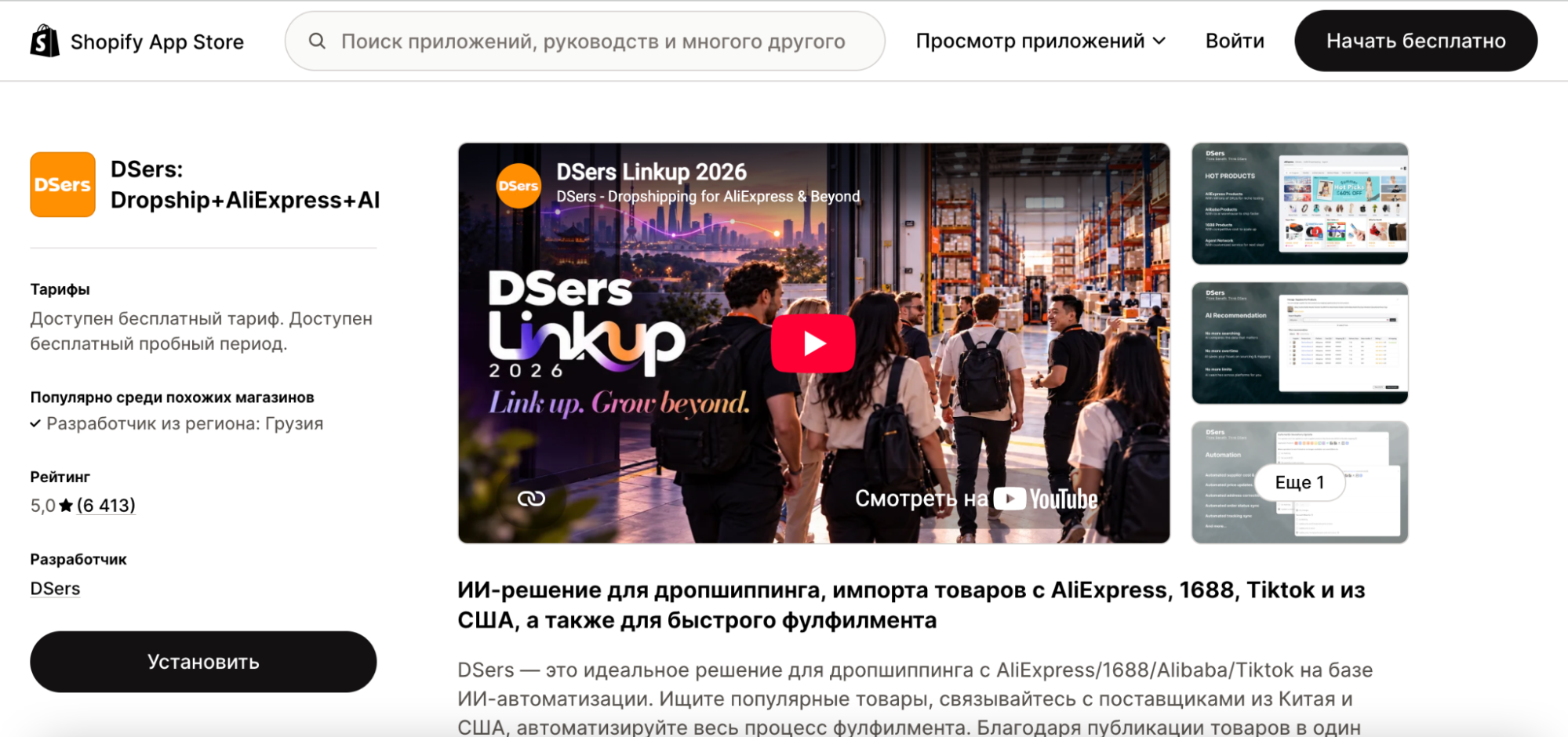
The fastest way to get started. DSers — is an official AliExpress dropshipping partner: products can be imported into Shopify in just a couple of clicks, orders are automatically sent to sellers, and tracking numbers are synced with your store. The downside is that every AliExpress seller operates independently. Quality, packaging and shipping speed can vary significantly between sellers offering the same product, so choose a seller with a high rating and a large number of orders for that specific product, not just for the store overall.
CJdropshipping
Works as an agent: CJ has its own catalog, and if the product you need isn't listed, you can submit a sourcing request, and they'll find a factory and provide a price. CJ also has its own warehouses in the US and Europe, shipping services and branded packaging. For those running traffic to Tier-1 countries, this is the next step after AliExpress.
Local suppliers
Spocket and similar platforms bring together suppliers from the US and Europe. Products are usually more expensive than those sourced from China, but shipping is faster and there are fewer chargebacks caused by long delivery times. This makes sense if you're selling in the US or EU and your margins allow it.
Private sourcing agent in China
Dropshippers switch to this option once a product has proven successful and it's time to scale. The agent purchases products in bulk through 1688 or Alibaba, stores them in their warehouse, checks them before shipping and packages them under your brand. The price per unit is lower than on AliExpress, and orders are processed faster. Agents are found through recommendations in specialized chats and among other dropshippers.
Important! Start with a small upfront payment: there are scammers among agents too.
What to check with a supplier before launching:
-
Order the product for yourself and inspect its quality and packaging firsthand.
-
Check whether the tracking number updates and whether the package can be tracked on the local postal service's website in the buyer's country.
-
Find out how the supplier handles defective products: whether they replace them, issue refunds or only offer a discount on the next order.
-
Check warehouse stock levels. If a product runs out in the middle of a campaign, you'll have to pause advertising.
For products that are already generating profit, find a second supplier in advance. If your main supplier raises prices or disappears, you can simply switch orders to another one while your ads continue running.
How to set up payment processing on Shopify from Russia and the CIS
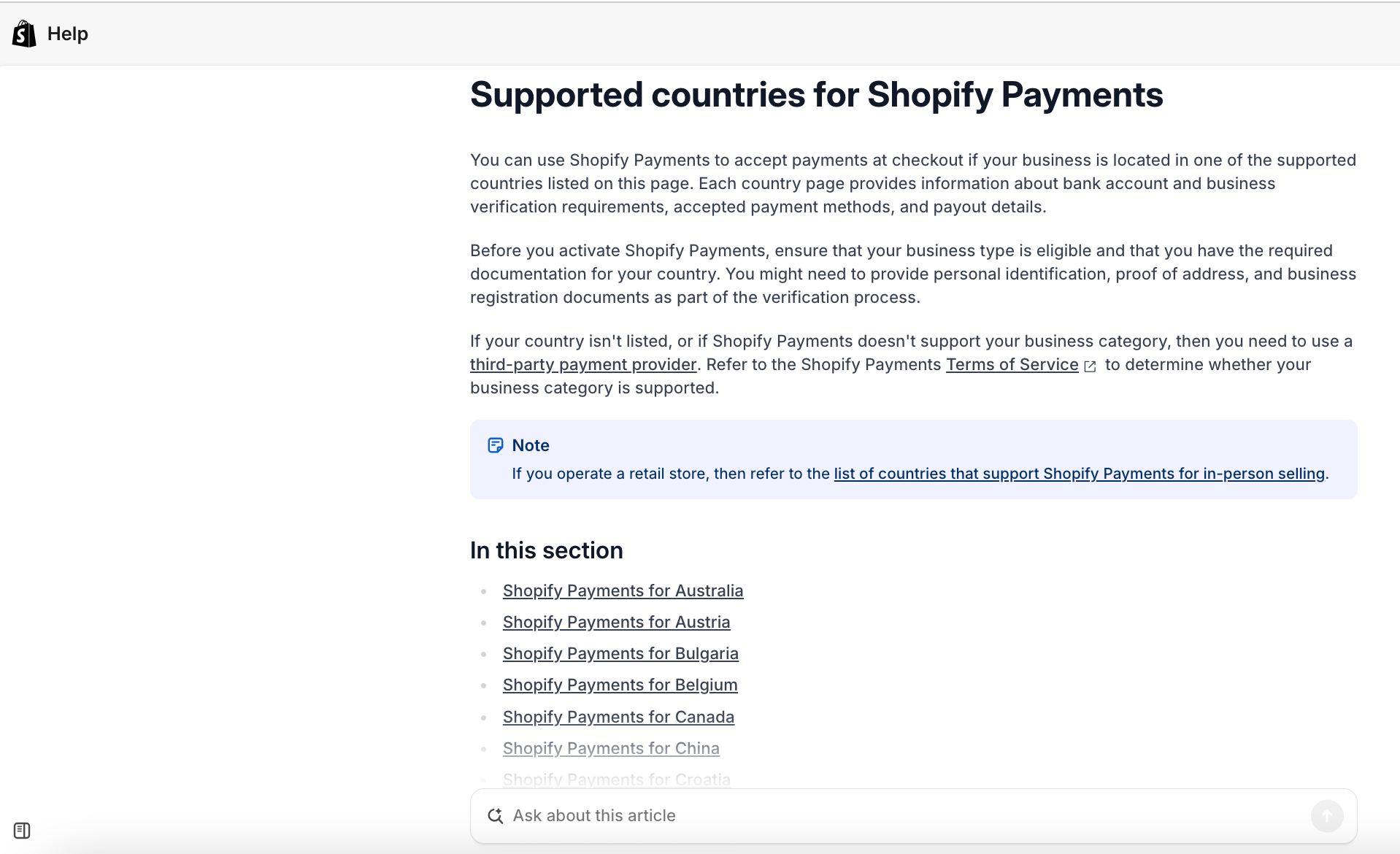
Shopify Payments operates in only 41 countries, and none of the CIS countries are among them. The situation is even more difficult for Russians. Since 2022, Shopify has not accepted payments for merchants from Russia, and Stripe does not work with people located in the Russian Federation. Wise blocks cards belonging to Russians without EEA residence permits, while Revolut closes their accounts. That's why payment processing has to be arranged through other methods. Just keep in mind that Shopify charges its own transaction fee for any third-party payment provider: 2% on Basic, 1% on Grow and 0.6% on Advanced.
Ready-made verified account
The fastest way to get started. Stripe and Shopify Payments accounts that have already been registered and verified under individuals or companies in the US and Europe are sold on the market. They usually come with the documents used for verification, an email address, a phone number and instructions. Warmed-up accounts with a payment history are more expensive, but they have shorter payout holds.
Before buying, check the payout hold period, transaction history and replacement terms in case the account gets banned. The main risk is that the account is legally registered to someone else: if documents are checked again or the account gets banned, you could lose the money in its balance. That's why you shouldn't accumulate large amounts in the account and should withdraw revenue regularly.
An account registered to someone you know abroad
A real person living in the US or Europe opens the payment account, while you manage the store. Such an account passes verification more easily than a purchased one, but all the money goes through someone else's account, so this option is suitable only if you trust that person completely.
Your own company abroad
An option for those planning to operate long-term and scale. It's easiest for affiliate marketers from Kazakhstan, Uzbekistan, Kyrgyzstan and Armenia, since their citizens are not subject to sanctions:
-
USA. An LLC can be registered online, for example through Stripe Atlas. However, Shopify Payments requires a real US business address and an account with a US bank, so Stripe is more commonly connected to the store through a third-party app.
-
United Kingdom. An LTD provides access to Shopify Payments UK, while a bank account can be opened with Wise or Revolut Business. This option isn't suitable for Russians without an EEA residence permit because of these banks' restrictions.
There's also an option that doesn't require a company abroad: in Kazakhstan, PayPal Business can be connected through a local sole proprietorship or LLP, while in Uzbekistan, Payze can be connected using its official app in the Shopify App Store.
Payment agents
Intermediaries accept customers' payments through their own companies and transfer the revenue to you for a commission. This is convenient if you don't want to deal with payment accounts, but you'll be completely dependent on the agent, so start with small amounts.
Payment providers' website requirements
Whichever option you choose, the payment provider will check your website. Stripe, for example, won't activate an account if the website doesn't have customer support contact information, product return terms, refund procedures and dispute resolution policies. These checks take place not only during account setup but also while the store is operating.
Payout holds and account bans
Payment systems consider dropshipping a risky business because of long delivery times and disputes. A new store's first payouts may be held while the account is being reviewed. If chargebacks and returns increase, the payment provider may impose a reserve: part or all of the money is frozen, for 120 days in Shopify's own examples. If there are too many disputes, the payment account may also be banned.
You can reduce the risks by controlling what you can. Clearly state your actual shipping and return terms on the website, upload tracking numbers to orders immediately and respond to customers before they turn to their banks. Also, keep a second payment provider available: if the main one gets banned, the store can continue accepting payments and you won't have to stop your advertising campaigns.
Traffic sources
Dropshipping — is essentially white-hat physical product marketing, so you can run traffic from almost any source without cloaking or struggling with moderation, as you might in nutra or gambling. The downside is that hundreds of stores advertise the same products, and the winners are those with stronger creatives and a lower cost per click.
Facebook and Instagram
The main traffic source for impulse-buy products that can be sold through the video itself. Campaigns are launched with a sales objective and broad targeting: Meta finds potential buyers itself, while creatives determine the results. To help Meta understand who your customers are, connect the Pixel and Conversions API through the official Facebook & Instagram app in Shopify. The Pixel tracks customer actions on the website, from viewing a product to completing payment, while the Conversions API sends the same events from the server so data isn't lost because of ad blockers. To run campaigns, you'll need ad accounts: agency accounts or farmed accounts, plus backups in case of a ban.
TikTok Ads
Visual products and anything that can be demonstrated in action perform well here: gadgets, home products and beauty products. The audience is younger than on Facebook. Spark Ads are convenient here: they allow you to turn an already published video, either your own or a blogger's, into an ad. The ad runs under the creator's name, and all likes and comments accumulate on the original post, making the advertising look like an ordinary video gaining popularity. With TikTok Ads accounts, it's the same as on Facebook: marketers use agency or regular accounts.
Google Shopping and Performance Max
Suitable for products that people are already actively searching for: phone cases, accessories, spare parts and pet products. Buyers immediately see the photo, price and store, so the traffic has high purchase intent. However, before launching, you need Google Merchant Center, which often bans dropshipping stores for misrepresentation (providing inaccurate information about the business or product). To avoid getting banned, don't copy suppliers' photos and descriptions exactly, provide genuine contact information on your website and clearly state shipping and return policies.
Works like a search engine for ideas. Its audience is mainly from Tier-1 countries, with a large proportion of women. It's suitable for decorations, home products, clothing and accessories. Aggressive ad creatives don't perform well here; Pins should look aesthetically pleasing. Advertising requires a Pinterest business account, while organic posting requires several warmed-up profiles.
Organic traffic
Organic traffic from TikTok, Reels and Shorts helps test a product before spending money on advertising. If a product video goes viral in recommendations and people start asking where to buy it in the comments, you can confidently start running paid traffic to it.
For this type of testing, you need an account network: a single video might appear in recommendations purely by chance, while several profiles make it easier to see whether there's genuine interest in the product.
Influencers
Products are sent to micro-influencers in exchange for a video. The finished video can be used both as a post on the influencer's account and as an advertising creative. This is one of the cheapest ways to obtain authentic UGC.
When starting out, it's better to choose one traffic source and test it until you get results rather than spreading your efforts across everything at once. Most dropshippers start with Facebook or TikTok and add Google and Pinterest once a product has proven successful.
Which GEOs to target
Your GEO affects everything: cost per click, average order value, store language and even how much you'll pay for customs clearance.
Tier-1: USA, UK, Canada, Australia
The highest-spending audience: people are accustomed to paying online by card, readily make impulse purchases, and average order values are higher. Plus, one English-language store can serve several countries at once. The disadvantages — are expensive clicks and the toughest competition.
In the US, duty-free imports of packages worth up to $800 were eliminated in August 2025, so products from China are now subject to import duties. Include these costs in your prices or source products from US warehouses, for example through CJdropshipping. In the UK, packages worth up to £135 can still enter duty-free.
Europe: Germany, France, the Netherlands, Scandinavia
Buyers also have strong purchasing power, while advertising in non-English-speaking GEOs is cheaper than in the US and competition is lower. However, you'll need to translate your store and creatives into the local language: conversion rates will be noticeably lower in English. In July 2026, the EU abolished duty-free imports of packages worth up to €150 and introduced a fixed €3 duty per item in a package, while VAT is payable from the first euro. Take this into account when calculating your margins.
Tier-2: Spain, Italy, Poland
Clicks are even cheaper, but average order values are lower too. Suitable for inexpensive products that sell well through emotional appeal and for testing campaign setups before expanding into Tier-1 markets.
Tier-3: Latin America, Middle East, North Africa
People in these regions have less trust in online card payments, so traffic is mainly driven using the COD model with payment on delivery. Traditional prepaid dropshipping has low conversion rates here.
If you're just starting out, it's easier to begin with English-speaking Tier-1 countries: you don't need to translate your store, and demand for dropshipping products is highest there. Once your campaign setup becomes profitable, you can expand into Europe with translations and localized creatives.
Common mistakes
Dropshipping stores often fail not because of a bad product, but because of small details overlooked at the beginning.
-
Calculating margins without including all expenses. In addition to product costs and advertising, include shipping, customs duties, payment processing fees, Shopify's third-party transaction fees, paid apps and returns. Calculate in advance how much you can afford to spend to acquire one purchase while remaining profitable, and compare this figure with your ad account statistics.
-
Increasing the budget too quickly. Payment providers are responsible to banks for chargebacks, so a sudden spike in sales at a new store raises concerns: it can resemble both a scam and a store that won't be able to fulfill its orders. Shopify explicitly lists such growth as one reason for imposing a reserve. If you had 5 orders yesterday and 100 today, part of your revenue may be frozen exactly when you need to pay your supplier. It's better to increase the budget gradually.
-
Forgetting about seasonality. Before Black Friday and the Christmas and New Year holidays, suppliers and postal services become overloaded, delivery times increase, and disputes become more frequent. Arrange extra stock with your agent in advance and update the shipping times on your website to reflect reality.
It's better to plan for all of this before launching rather than after your money has already been frozen in reserve.
FAQ
How much does Shopify cost when starting out?
Shopify offers a promotion for new stores: you can use it free for 3 days, followed by 3 months at $1 per month. After that, regular pricing applies: the Basic plan costs $39 per month, or $29 per month if billed annually. Paid apps and themes are charged separately.
Can you dropship without Shopify?
Yes. For example, you can use WordPress with the WooCommerce plugin or platforms designed for dropshipping, such as Shoplazza. But it's easier for beginners to start with Shopify. The platform handles hosting, security and updates for you. DSers, CJdropshipping and other supplier services can be connected in just a couple of clicks, as can the official Facebook, TikTok and Google advertising apps. With WooCommerce, you'll have to configure all of this yourself or hire a developer. However, using another platform doesn't solve the payment processing problem: Stripe, PayPal and other gateways impose the same requirements regarding business location and documentation everywhere.
Do you need to pay VAT when selling to Europe and the UK?
Yes. In the EU, VAT is payable on every purchase, even the cheapest ones. There are two options. First — the buyer pays the tax when collecting the package, and the postal service also charges a fee. This frustrates many customers, and some simply refuse to collect their packages. Second — the seller includes VAT in the price on the website and pays it to the tax authorities through the IOSS system. It applies to packages worth up to €150. Sellers based outside the EU cannot register for IOSS directly; they must use an intermediary — a company in the EU that handles registration and monthly reporting for a fee.
In the UK, there's only one option for packages worth up to £135: the seller includes VAT in the price, which requires registration with the UK tax authorities.
What should you do if a customer opens a chargeback?
Respond instead of waiting. In Shopify, every dispute has a deadline for submitting evidence: a tracking number with proof of delivery, correspondence with the customer and the return policy from your website. If you don't have evidence or miss the deadline, the money and dispute fee will be automatically deducted from your account.