
The internet is full of stories about people who earn thousands of dollars while working from a laptop anywhere in the world and call themselves affiliate marketers. To a beginner, it often looks like magic or a closed club for the chosen few. But in reality, traffic arbitrage — is a logical, understandable and completely real profession.
Its essence comes down to a simple mechanism: you find customers for someone else’s business and receive a reward for every successful deal. No secret schemes — just math, marketing and an understanding of how advertising works.

What is traffic arbitrage: a guide for beginners
We have put together a detailed step-by-step guide for those who want to enter the profession from scratch. Let’s break down how this business works from the inside, who pays whom and what the main task of an affiliate marketer is.
The basics: what traffic arbitrage really is
In traditional marketing, a company hires a specialist, gives them an advertising budget and pays a salary. If the advertising does not work and the money is wasted, the company bears the losses.
Traffic arbitrage works differently. An affiliate marketer (or webmaster) — is an independent partner who attracts customers on their own. This can be done in two ways: by investing money or investing time.
-
Paid traffic. The affiliate marketer launches advertising with their own money. If they spent $100 and earned $50 — that is entirely their problem and their loss. But if they spent $100 and earned $500 — the difference between revenue and costs remains theirs. They buy traffic and direct it to an offer, receiving a payout for target actions.
-
Organic traffic (UBT). If there is no advertising budget, the affiliate marketer gets traffic for free. They create content: videos for TikTok, Reels or YouTube Shorts, write articles and develop their own channels. The platform itself gives the content organic reach, while the affiliate marketer redirects these viewers through their link. Organic traffic allows you to start without a budget for buying ads, gain experience and build your first capital without the risk of losing money on advertising tests.
Regardless of the chosen path, the essence is the same: you bring customers to the advertiser and receive a payout for a target action. If the payout is higher than your traffic acquisition costs, you make money.
How this market works
To simplify it as much as possible, three parties take part in this model:
-
Advertiser (brand). They have a product: sneakers, a bank card, an online course or a mobile game. They need customers but do not want to maintain a huge marketing team and risk their budgets. They are willing to pay partners for the audience and target actions they bring — for example, a purchase, application or registration.
-
CPA network (affiliate network). This is an intermediary platform, a marketplace for affiliate marketers. Advertisers come here and list their offers. The network handles the technical side: tracks clicks and target actions, maintains statistics, checks conversions and traffic quality, and handles payouts to partners.
-
Affiliate marketer (you). You register with a CPA network, choose an offer, get your unique link and start setting up advertising for it on social networks, search engines or other sources.
What exactly do you get paid for?
One of the most common models in affiliate marketing — is CPA (Cost Per Action), meaning payment for a target action. You are not paid simply for showing someone a nice image or getting likes. Money is credited when a user you brought completes a specific action that is defined in advance in the offer terms.
This may include:
-
purchasing a product with delivery;
-
applying for a free debit card;
-
registering in a service or game;
-
submitting a consultation request with contact details.
You brought a user — they completed the required action — the conversion was counted, and you received a payout for it. Everything is as transparent and predictable as possible.
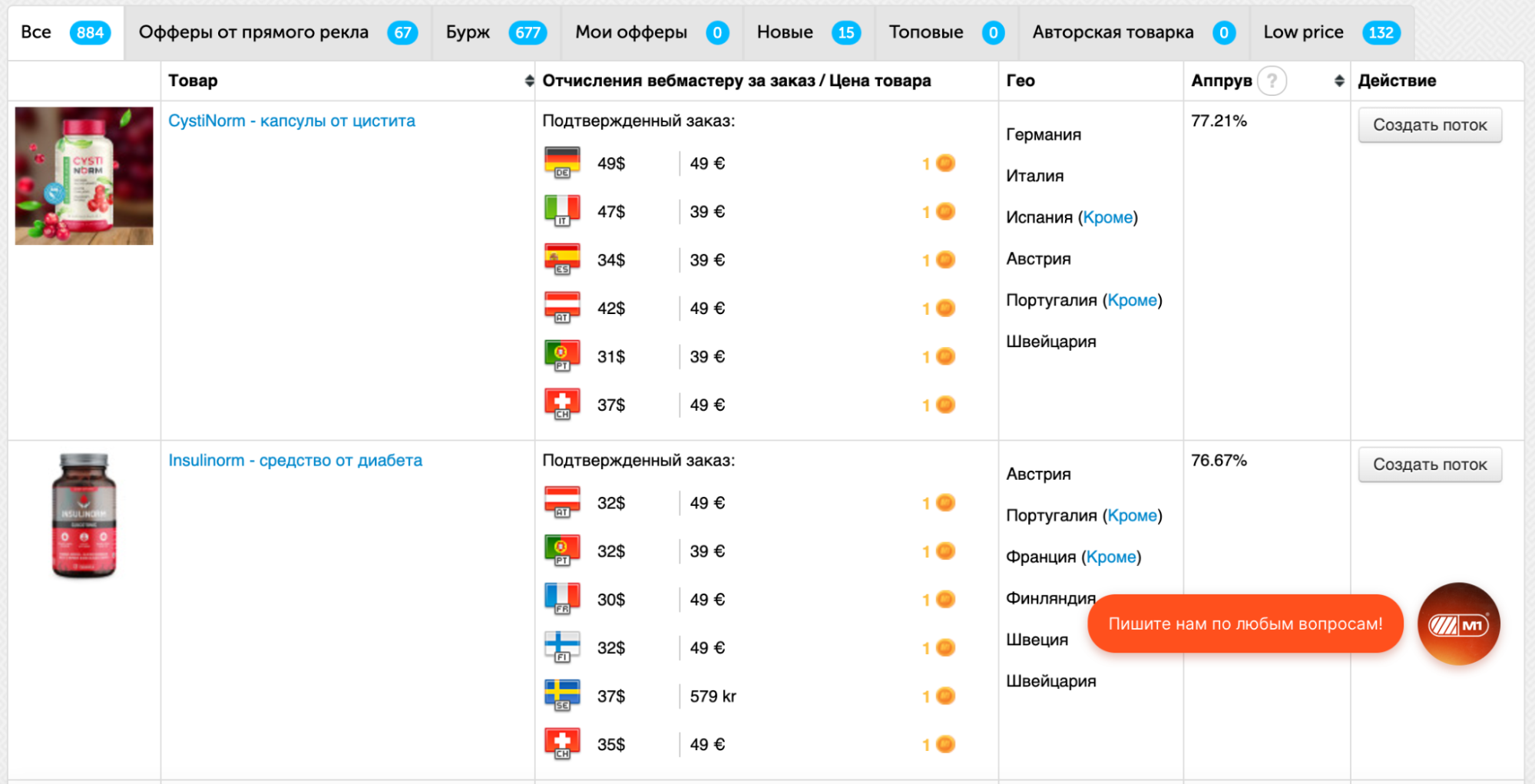
Example of an offer catalog in a CPA network
Beginner’s glossary: basic terms
To avoid getting lost in traffic arbitrage slang and to understand what people are talking about in educational materials and chats, let’s go over the main terms. This field uses many English loanwords, but their meaning is simple:
-
Offer — the product or service you advertise. It can be a physical product, credit card, mobile game or online course.
-
Lead — a potential customer who completed a target action, for example submitted an application, provided a phone number or registered in a service.
-
Approve — the percentage of confirmed leads. For example, you brought 10 people who submitted an order request. A call center operator reached and confirmed the order with five of them. Your approve rate — is 50%. The advertiser will pay only for them.
-
Hold — the period during which the affiliate network freezes your payout. This gives the advertiser time to check traffic quality (whether bots were used and whether these are real people).
-
Setup — a set of elements that together lead the user to a target action. For example, you launch advertising on TikTok, show a person a specific creative, send them to a pre-landing page and from there — to the offer landing page. All of these elements together make up the setup.
-
Creative — the advertisement itself. It is the image, video or text that your audience sees.
-
Landing page — a website (page) where a person completes a target action (purchase or registration).
-
Pre-landing page (bridge page) — an intermediate transit page between the advertisement and the landing page. It is usually designed as a personal blog, success story or news article. It is used to warm up a person’s interest and filter out irrelevant clickers.
-
ROI (Return on Investment) — an indicator of the return on your investment. If ROI is positive — you made a profit, if it is negative — you lost money.
Verticals: how to choose a direction
In traffic arbitrage, offers are commonly grouped by topic — these categories are called verticals. The vertical you choose determines which advertising sources you can use, what requirements you will have to follow and what difficulties you may face. In traffic arbitrage, verticals are conventionally divided into white, gray and other categories depending on the specifics of the offer, legislation and advertising platform rules.
White verticals
White verticals usually include legal products and services that can be openly advertised as long as advertising platform rules and legislation are followed.
-
E-commerce: physical products ranging from clothing and electronics to household goods.
-
Finance: debit and credit cards, microloans, insurance.
-
EdTech (information products): paid online courses, webinars, professional schools.
-
HR: recruiting employees for large companies (couriers, cashiers, taxi drivers).
Pros: Usually fewer restrictions and blocking risks compared with regulated verticals, while working with advertising platforms is more predictable.
Cons: High competition.
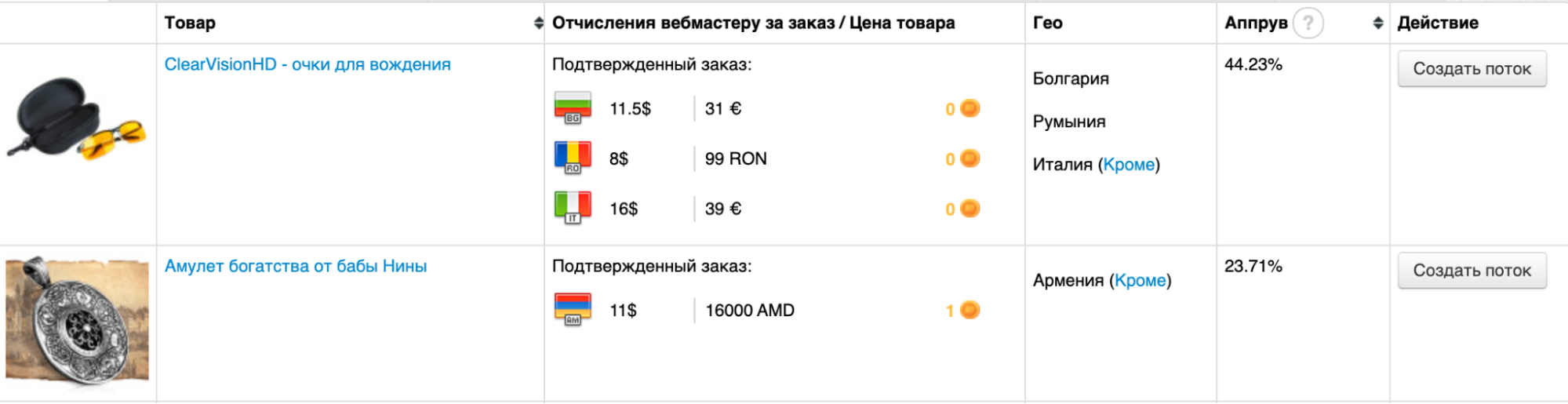
White niches in traffic arbitrage: example of e-commerce offers
Gray verticals
Gray or regulated verticals usually include niches whose promotion is restricted by advertising platform rules or the laws of individual countries. Working with such offers requires more careful attention to the choice of traffic source, GEO, advertising materials and the terms of the offer itself.
-
Gambling: online casinos and other forms of gambling. Promotion options depend heavily on the country, license and rules of the specific advertising platform.
-
Betting: sports and esports betting.
-
Nutra: beauty and health products (joint creams, weight-loss products, dietary supplements).
-
Dating: dating websites (from regular services to 18+ categories).
Pros: Payouts for a confirmed customer can be significantly higher than in white verticals, while the potential audience is very large.
Cons: More restrictions from advertising platforms, a higher risk of ad rejection and account blocking, as well as more requirements for choosing GEO, the offer and advertising creatives.
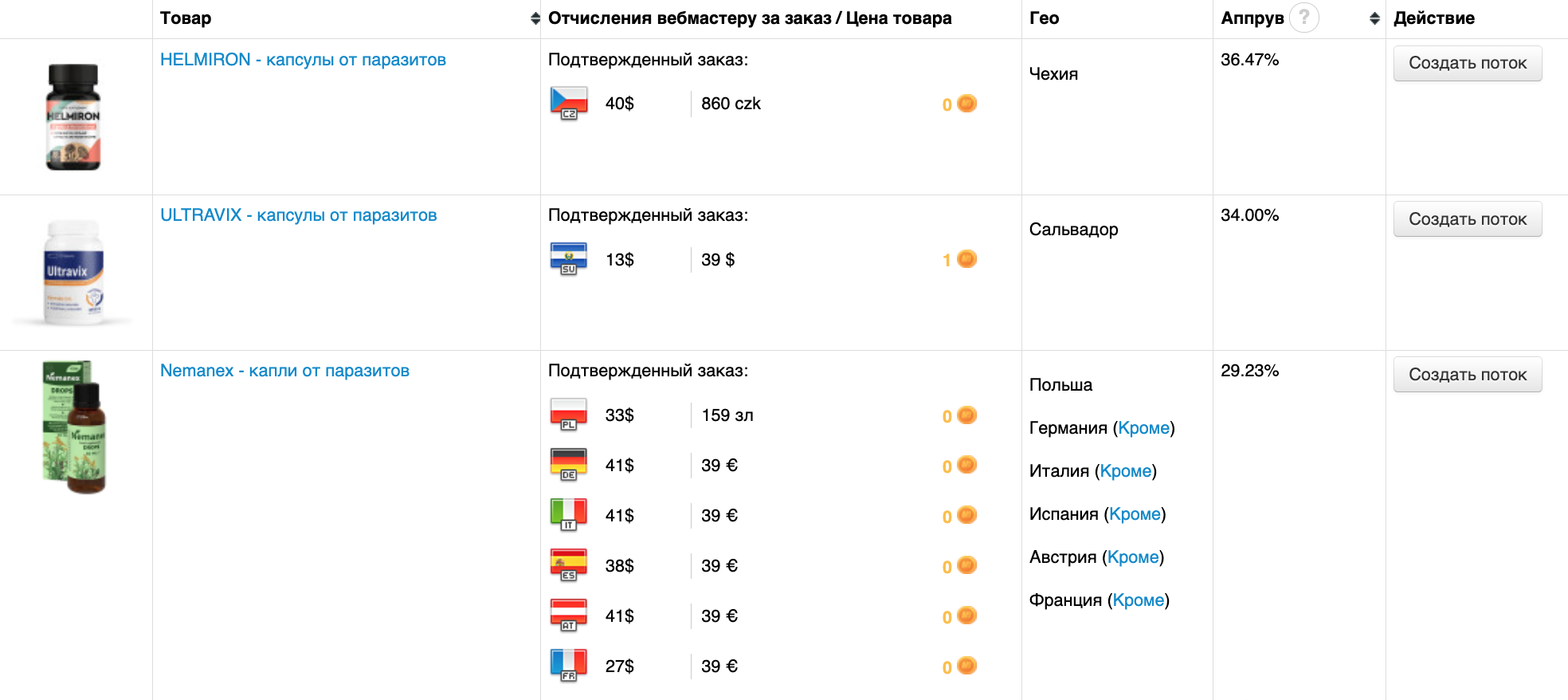
Gray niches in traffic arbitrage: examples of offers
Where a beginner should start in traffic arbitrage
You will have to learn how to work with traffic and analytics either way. So your starting path depends on just one thing: whether you are ready to pay for audience attention or will attract it using free methods.
-
If you have a small advertising budget: Start with white niches — e-commerce, HR offers or simple financial products such as debit cards. Here you can calmly learn how to configure advertising campaigns, test creatives and analyze statistics without the stress of sudden account blocks.
-
If you have no advertising budget (starting with organic traffic): Organic traffic works well with the same e-commerce products (for example, viral reviews and unboxings of trending items), as well as information products. You create content for Shorts, Reels or TikTok and redirect loyal viewers through your link.
Expert opinion: «I would not advise a beginner to constantly jump from one vertical to another. It is better to choose several directions, test them and only then settle on one. This way you will understand where you perform better and what you are more interested in working with».
Traffic sources: where to get an audience
There is nothing to do in traffic arbitrage without traffic. You can find an excellent offer, build a beautiful landing page and come up with a dozen creatives, but if no one clicks them — there will be no earnings.
A traffic source, or source, — is the platform from which you bring users. You can buy impressions and clicks from advertising platforms, or attract the audience yourself — for example, through TikTok, SEO or your own Telegram channel.
Paid sources
Everything is fairly simple here: you pay the platform for traffic and then try to turn it into conversions and earn more than you spent.
The main thing — is not to confuse an advertising budget with money you «cannot afford to lose». The first launches are almost always needed specifically for testing: some creatives will not work, a certain GEO may turn out to be too expensive, while another option may unexpectedly perform very well. Therefore, putting your last money into traffic in the hope of becoming profitable immediately — is a bad idea.
Facebook and Instagram Ads
One of the most popular sources for targeted advertising. You choose the audience, upload creatives, configure the campaign and see what the clicks and impressions turn into.
Testing requires a separate budget: it is usually too early to draw conclusions about a setup based on the first few dozen clicks. Meta has strict rules, so ads may be rejected and advertising accounts — may receive restrictions. Platform requirements have to be taken into account already at the stage of preparing creatives and the setup.

Example of paid advertising
Here you can reach users at the exact moment when they are already searching for the required product or service. A query such as «buy robot vacuum cleaner» or «apply for a credit card» already shows that the user is interested in buying rather than simply seeing an ad by chance.
Traffic cost depends on GEO, the offer and competition for advertising queries. In some niches, clicks are expensive and advertising rules are fairly strict. But with the right keyword selection, you can get highly targeted traffic.
Official advertising inside TikTok. This source works well for vertical videos and products that are easy to demonstrate through a short and engaging video.
Creatives can burn out quickly here, so you have to regularly test new videos and approaches. Several advertising launches will also require a separate budget.
Teaser networks and Push
Teasers — are clickable advertising blocks on websites, while Push — are notifications that users receive after giving permission for them to be sent.
Such sources are attractive because of their low cost per click and are used in different verticals. But a cheap click by itself means nothing — traffic quality has to be evaluated based on final conversions.
In-app networks
Advertising inside mobile applications and games. Such traffic is often used to promote apps, games and subscription services.
You can work with a large volume of mobile users, but results strongly depend on the specific network, GEO, advertising format and offer.
Organic traffic sources (UBT)
If you do not yet have money to buy advertising, this does not mean that traffic arbitrage is closed to you. You can attract traffic for free — for example, through social media content, Telegram or search results.
However, the word «free» is conditional here. Instead of money, you pay with time: create creatives, write articles, develop channels, test topics and wait for algorithms or search engines to start bringing an audience.
-
Short vertical videos (TikTok, Reels, Shorts). One of the most straightforward ways to start without a traffic acquisition budget. You create videos, publish them and try to get organic reach.
-
Who it is suitable for: those who are ready to publish content regularly, know how to work with video or are at least willing to learn.
-

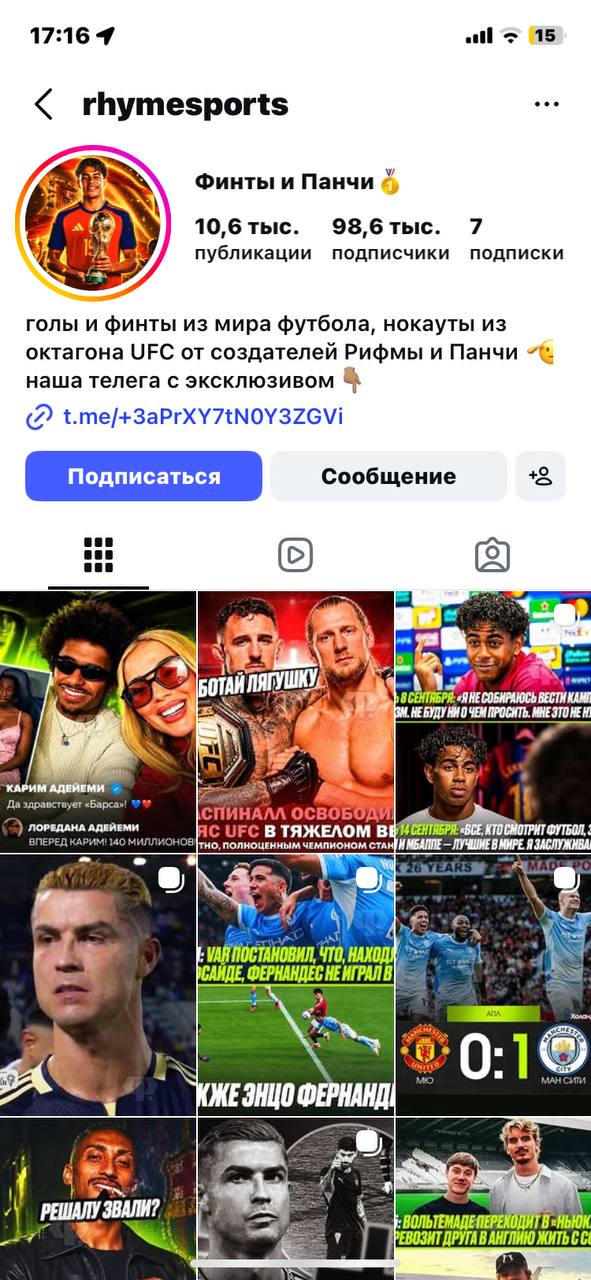
TikTok channel redirecting traffic to Telegram
-
SEO websites (organic search traffic). You can create an informational website, blog or aggregator — for example, with product reviews, promo codes or credit cards. If the pages rank in search results, users will start visiting them on their own and following affiliate links.
-
Who it is suitable for: those who are ready to work for the long term. SEO rarely produces fast results, but a successful website can steadily generate search traffic.
-
-
Telegram channels and communities. You can develop your own channel, attract an audience with content and recommendations, and then place affiliate links inside it.
-
Who it is suitable for: those who are ready to work with content consistently and gradually build their own audience.
-
What a setup consists of
You will constantly come across the word «setup» in traffic arbitrage. It is not some secret algorithm, but simply a ready-made chain that the user follows from the first interaction with the ad to the target action. If all elements of this chain are selected correctly and generate more money than you spend on traffic, the setup is considered profitable.
A classic setup consists of five elements:
-
Offer and GEO: what exactly you are promoting and in which country (for example, a credit card in Kazakhstan or an online course in Spain).
-
Traffic source: the platform users come from (VK targeted ads, Google contextual advertising or Reels).
-
Creative: the image, text or video that made the user stop and click.
-
Pre-landing page (bridge page): a transit page that warms up interest. It is not always used but is often a key element of the funnel.
-
Landing page: the advertiser’s final website where the user submits an application, buys a product or registers.
Example of a non-working (dead) setup
Beginners often think it is enough to simply take an affiliate link and launch advertising to it with a «Buy» call to action.
-
What it looks like: A user scrolls through their feed and sees a banner: «Interior design course for 10,000 rubles». They click and land on a page with a payment button.
-
Why it does not work: Cold traffic from social networks is not ready to spend money immediately. The person was simply scrolling through the feed and was not looking for anything specific — they do not trust an unfamiliar school and do not understand the value of the course. The user closes the website after three seconds, while the affiliate marketer records a loss for the paid click. Direct hard selling rarely works now and only with very hot traffic (for example, from search).
Example of a working funnel
To get a person to the target action, you need to warm them up and gradually address their objections.
-
Creative: A short video with the headline «How to learn interior design from scratch and get your first client within a month». The person clicks because they are being offered a solution to a problem (earning money), rather than being asked to spend money.
-
Pre-landing page: The user lands on an interview article with a student who tells her story: how she was afraid to change careers, how the training went and how much she earns now. The reader becomes engaged, relates the situation to themselves and starts trusting the product.
-
Landing page: At the end of the article, there is a naturally placed link to a free webinar or the first free lesson of the course. The user goes to the advertiser’s website and easily leaves their email because they are already prepared and motivated.
The main rule of any setup — promises must match reality. What you promise in the creative must match what the person sees on the pre-landing page and landing page. If the advertising video promises a 50% discount but it is nowhere mentioned on the product website, the user will feel deceived and close the page. Every step of the funnel should logically continue the previous one.
Tools for an affiliate marketer
In traffic arbitrage, people rarely work from a single personal profile. Advertising platforms regularly block accounts (sometimes even because of an algorithmic error), so webmasters have to restore access, create new accounts or move their work to other advertising accounts. Specialized software and account resources are used to automate this routine and avoid mass bans.
-
Advertising accounts. Profiles from which advertising is configured and run. Using your personal page is risky: if it gets blocked, access to advertising accounts may be lost. That is why separate accounts are used for work. They come in different types: from simple newly registered accounts (pages that have just been created) to «warmed-up» accounts with history, which moderation systems initially trust more.
-
Antidetect browsers. A regular browser sends websites a lot of information about your device: operating system version, language, screen resolution and fonts. This is a digital fingerprint. If you log in to several advertising accounts from the same browser and device, the platform may link them together. In an antidetect browser, you can create a separate profile with a unique fingerprint for each account.
-
Proxy servers. If an antidetect browser changes the digital fingerprint of the browser and device, a proxy changes your IP address. Mobile proxies are most often used in traffic arbitrage — they imitate a smartphone user’s connection through a mobile operator. Such proxies are often used for working with advertising accounts, especially when it is important to tie an account to a specific GEO.
-
Trackers. The main analytical tool for an affiliate marketer. A tracker collects detailed statistics for every click: which GEO the person came from, which device they used, which creative worked and which one generates losses. Without a tracker, it is harder to understand where conversions come from, so optimizing the campaign becomes much more difficult.
-
Spy services. Services for analyzing competitors’ creatives. They collect advertisements that are currently running on popular platforms, teaser networks or search. This is useful for building visual awareness: you analyze which approaches and formats others use and create your own creatives based on them.
-
Payment services (virtual cards). Bank cards are needed to pay for advertising. If an advertising account is blocked, the card linked to it may also become restricted or stop being accepted by the platform. Using a personal card here is risky. For this purpose, special services are used that allow virtual cards to be issued and linked to advertising accounts.
Step-by-step launch of your first campaign
Let’s use a simple example to break down how to launch an advertising campaign — from choosing an offer to getting the first results.
Step 1. Register with an affiliate network and choose an offer
First, you register with a CPA network and get access to its offer catalog. After registration, it is useful to contact your personal manager — their contact details usually appear in the dashboard. The manager can suggest which offers are currently performing well and are suitable for your traffic source.
When choosing an offer, do not look only at the payout amount. It is important to check which traffic sources are allowed, which GEO is suitable, how long the hold lasts and what percentage of leads is usually approved.
Step 2. Prepare the technical setup
If you have chosen a paid source with moderation, such as targeted advertising, you first need to prepare an advertising account and payment method. Depending on the source and working conditions, you may need an antidetect browser, proxies and separate advertising profiles.
If you start with organic traffic, everything is simpler: create a profile or channel on the selected platform, set it up and start developing it to get your first reach and clicks.
Step 3. Analyze competitors and prepare creatives
Now is the right time to see how other affiliate marketers advertise similar offers. You can use spy services for this or simply search for ads manually on the platform itself.
You should not copy someone else’s banners and videos exactly. If too many people use the same creative, it may lose clickability over time and become less profitable. It is better to see which approaches work for others and create your own versions based on them.
For example, if short video reviews perform well for competitors, you can take the format idea itself and come up with your own script. For the first launch, it is better to prepare several different creatives to understand which one the audience responds to best.
Step 4. Set up links and analytics
In the affiliate network, you receive your personal offer link. If you use a tracker, add it there so you can track visits and understand which ads and audiences generate results.
Before launching, be sure to check everything manually: the link should open, the landing page — should load properly, and the test visit should appear in the affiliate network statistics. It is better to spend five minutes checking than later look for the reason why not a single conversion came through.
Step 5. Launch test traffic
Next, upload the creatives to the advertising account, configure the audience settings and launch the campaign.
At this stage, you should not expect instant profit. The first launch is primarily a test: you want to understand which creatives get clicks, which audience responds better and how much it costs to acquire a user.
Some ads may not work at all — this is normal. The purpose of the test is precisely to find the options that make sense to scale further.
Step 6. Analytics and optimization
Once enough statistics have accumulated, look at the results. If a creative generates expensive clicks and no conversions, it can be turned off. If a certain audience performs better than the others, part of the budget can be moved there.
For example, users over 35 may submit applications more often than a younger audience. In that case, it makes sense to test increasing the budget specifically for this segment.
Traffic arbitrage — is a constant search for working options: test a hypothesis, look at the numbers, keep what works and try to improve the result.
Main mistakes at the start
Even if everything is technically configured correctly, the first campaign may still lose money. Most often, the problem is not some secret setting, but ordinary mistakes.
-
Launching without tests. You should not bet everything on one creative and immediately send the entire budget to it. It is better to test several options and see which one produces results.
-
Ignoring analytics. You can launch advertising, get clicks and even spend a decent amount, but still fail to understand what exactly went wrong. Without analytics, it is difficult to determine at which stage the audience drops off and which sources or ads spend the budget without conversions.
-
Blindly copying creatives. If the same advertising video appears frequently in spy services, it is most likely already being used by several affiliate marketers at once. The creative may burn out and start generating fewer clicks. It is better to use other people’s findings as a source of ideas rather than as ready-made material to copy.
Do not try to understand every source, vertical and tool at once. For your first launch, choose one clear vertical, find a suitable offer and decide on a traffic source. Then build a simple setup, launch a small test and look at the numbers. In traffic arbitrage, you cannot read one guide and immediately start earning consistently — the main skills appear specifically during testing and working with real traffic.
FAQ: popular questions about traffic arbitrage
How much money do you need to start? There is no single amount. If you choose organic traffic (UBT) through short videos, SEO or Telegram, you can start without an advertising budget, investing only your time and minimal funds in resources (for example, paying for a domain or software). If you plan to buy traffic from advertising networks to test white offers (e-commerce, information products), it is advisable to have a separate budget that allows you to run several full tests. The amount depends on the source, but you definitely should not enter paid traffic with your last money.
Is it legal? Traffic arbitrage itself — is a legal form of affiliate marketing. You receive a commission for an acquired customer under an agreement with a CPA network. Legal issues depend entirely on what and how you promote. Advertising bank cards, online schools or online stores is not prohibited in itself, but the requirements for such advertising depend on the country, product and advertising platform rules. Problems may arise if a webmaster chooses products prohibited in a particular country, uses advertisers’ brands in violation of the rules or openly misleads users with their creatives. The choice of niche and methods always remains yours.
Is it true that traffic arbitrage is dying? This discussion appears every time major advertising platforms tighten restrictions, make moderation more difficult or change their algorithms. In reality, the market is not dying, but becoming more professional. Primitive approaches stop being profitable, the entry barrier in some niches is rising, but as long as businesses need customers, demand for quality traffic is not going anywhere. Sources, tools and popular verticals change, but the essence of affiliate marketing itself continues to work.