Streams are rarely perceived as a stable traffic source, although in skilled hands, they generate deposits without serious investments. You don't need charisma or hosting skills here; in most cases, the result is determined by technical preparation. If you understand how the funnel is structured and how platform algorithms work, broadcasts turn into one of the cheapest ways to bring players to a casino.
In this article, we break down everything that affects traffic generation: from hardware choice and face masking to account warming and bypassing moderation.
Technical Setup and Hardware Requirements
Before preparing a script and selecting slots, you need to sort out the hardware and software. Streaming requires a stable PC configuration, as lags and freezes during the broadcast hinder viewer retention and directly lower the ROI of your setup.
PC Configuration. It is optimal to use a combination of the latest generations of i5/Ryzen 5 and a graphics card no lower than an RTX 2060. An SSD is mandatory, as without it, the software lags when running game windows and the browser simultaneously. For running at 1080p and 60 FPS via OBS or TikTok Live Studio, 16 GB of RAM is considered the minimum threshold.
Working via VDS. For TikTok broadcasts, using a Windows VDS allows you to hide the parameters of your real device. The platform tracks hardware fingerprints, and a virtual server helps bypass these restrictions. In the event of a ban, you can quickly change the server and continue working without altering your local PC.
Peripherals and Sound. Viewers leave if there is interference in the audio track. To start, budget USB microphones like Fifine or HyperX are sufficient, providing a clean voice without an external sound card. Avoid using Bluetooth headphones due to audio delays relative to the picture. A 1080p webcam resolution is enough, as platforms compress the stream during broadcasting anyway.
Anonymity: Face Swapping and On-Camera Work
Not every media buyer is ready to show their face on casino broadcasts. To maintain anonymity without sacrificing content quality, real-time appearance-altering software is used.
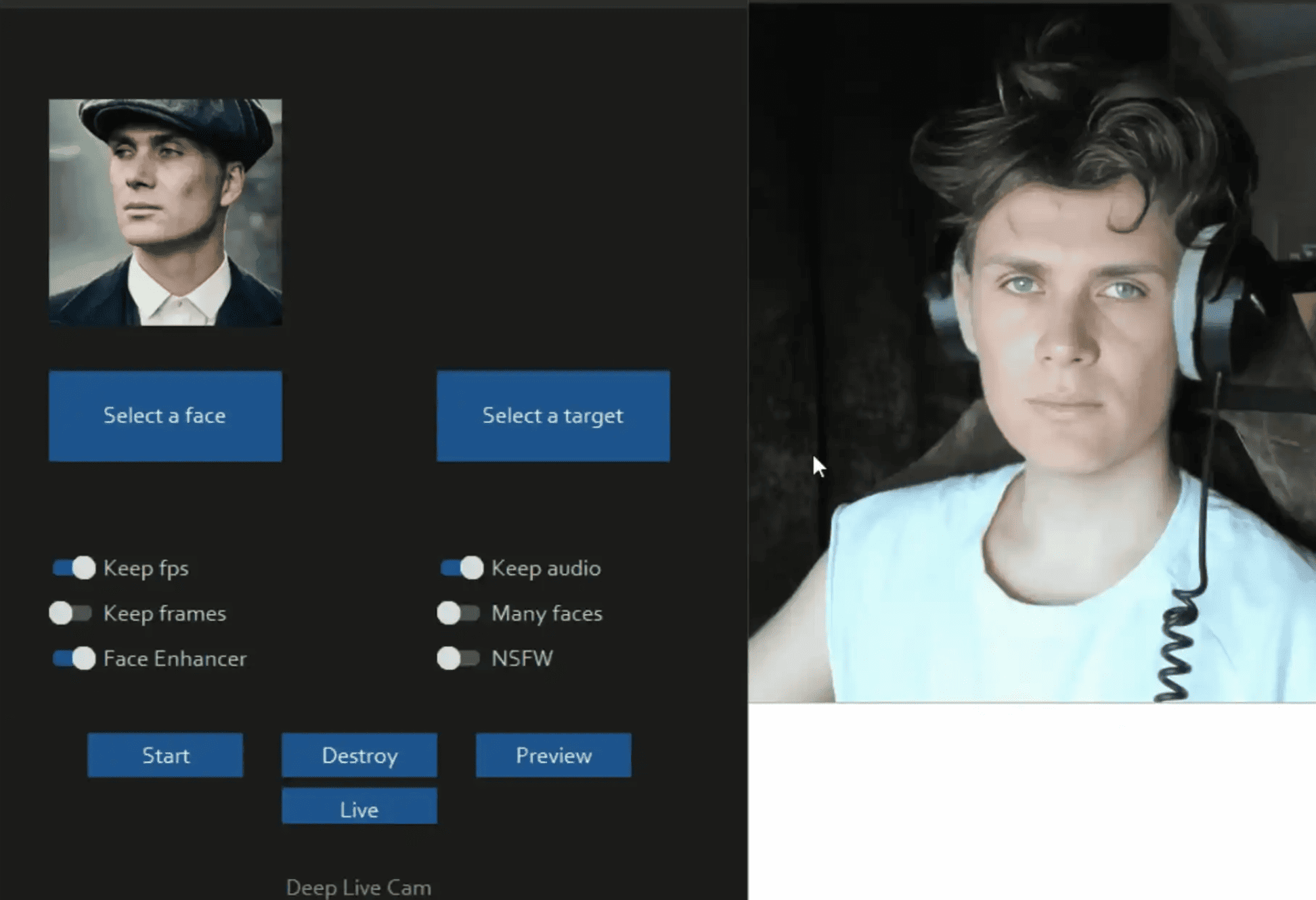
Face Swapping Tools. The Deep Live Cam program allows you to overlay a chosen face on top of yours right during the broadcast. To work without delays, a graphics card of at least the RTX series is required, as rendering occurs in live mode.
In the software interface, a reference photo is selected, whose features the neural network projects onto the streamer. The final image is transmitted to OBS via the virtual camera function. For correct overlaying, it is important to set up frontal lighting: in poor lighting, the neural network loses face contours, causing the mask to flicker or twitch.
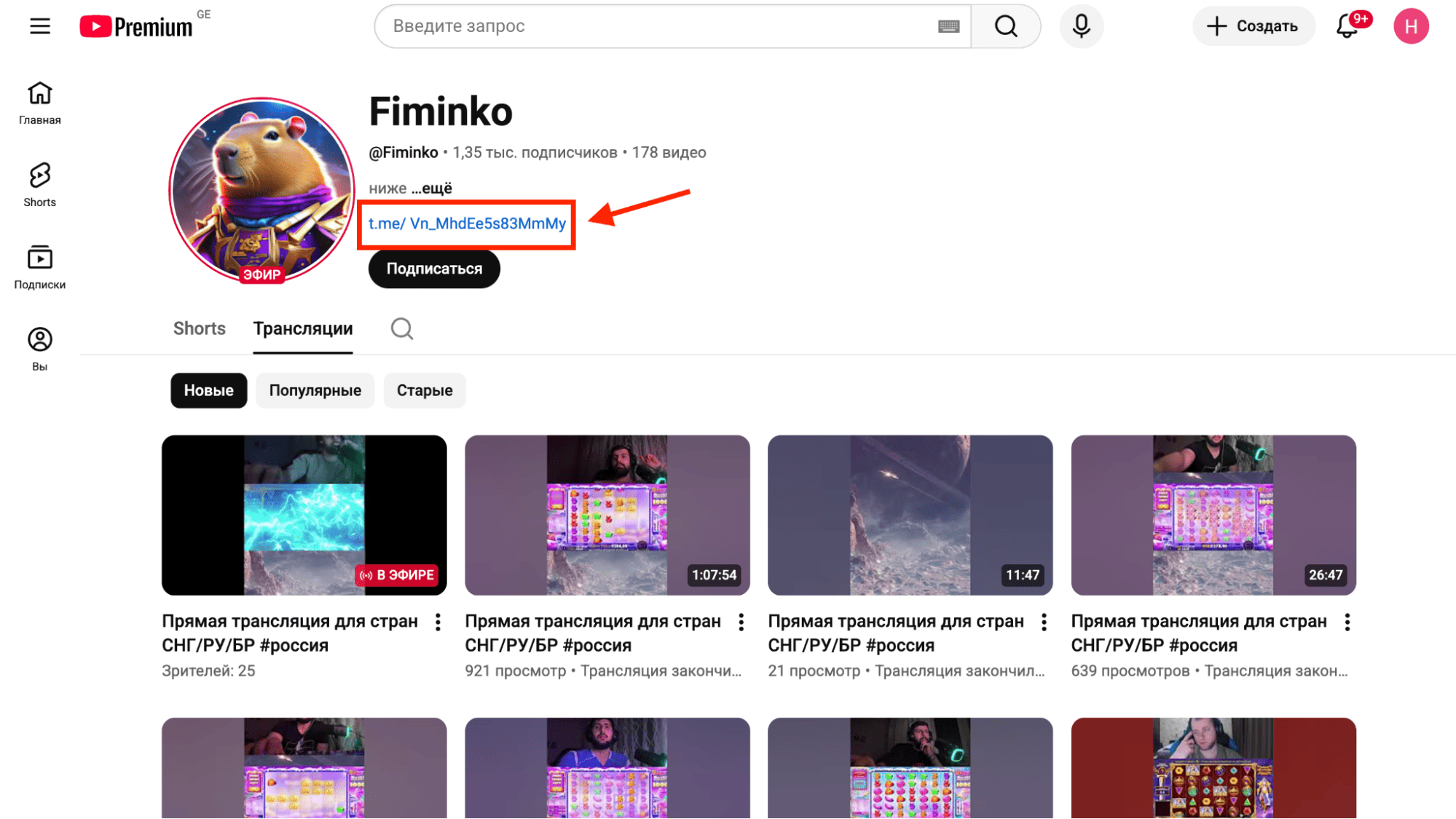
Funnel Logic via Telegram. Having a host in the frame is necessary to redirect viewers to Telegram. Platforms frequently block accounts for direct casino links, so traffic is funneled into the messenger instead.
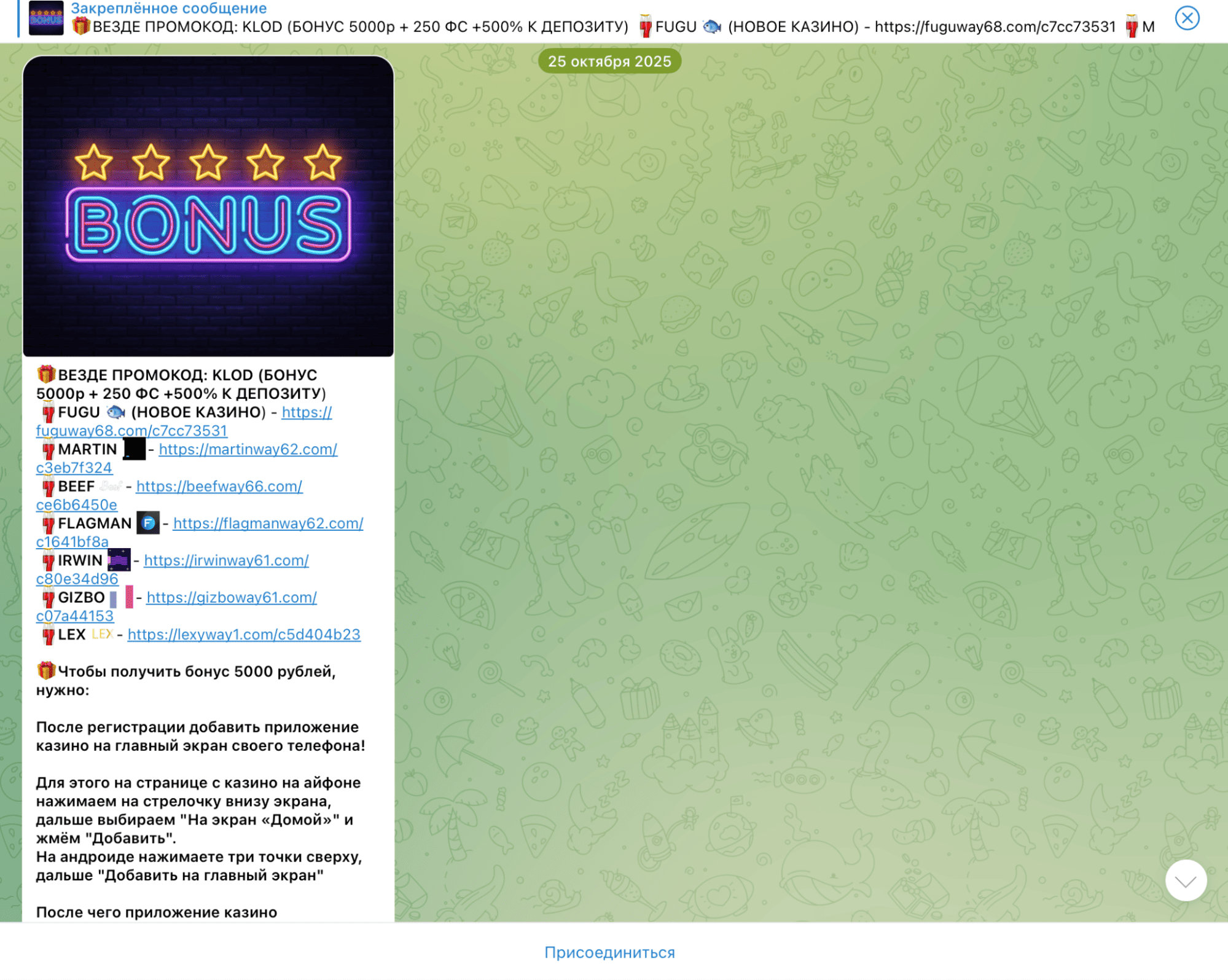
While playing, the streamer talks about the bonuses posted in Telegram and directs the audience to the link. Live interaction helps warm up the audience and increase the number of deposits.
Account Warming Algorithm for YouTube
Launching broadcasts on YouTube requires preliminary profile preparation. Google tracks browsing history and account activity, so streams on fresh channels fail to gain views or get banned quickly. The profile preparation process includes technical configuration and mimicking the actions of a real user.
Farming Cookies and Behavioral Factors. Before registering a channel, you need to build up a browsing history in an antidetect browser profile. To do this, visit Facebook, Twitch, VK, and other popular resources. Google flags profiles without active cookie files as suspicious, which lowers the trust score of the future channel.
After registering the account, the warming period begins. For a week, it is necessary to log into the profile daily for 10–15 minutes and watch videos related to casinos or betting. This helps YouTube's algorithms classify the user and prepare the channel for publishing target videos.
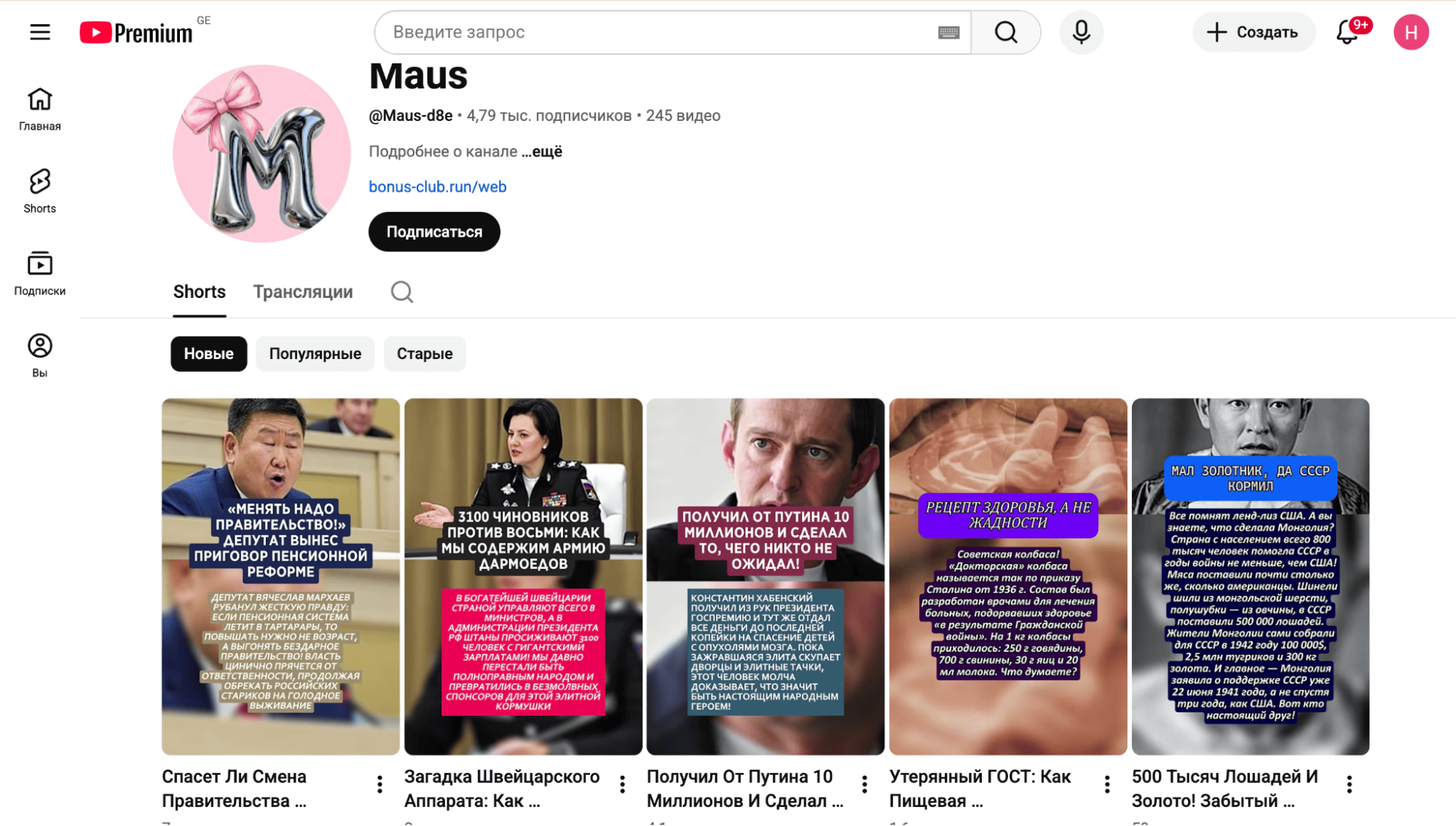
Testing Trust via Shorts. This stage is needed to gather the initial audience and check how the platform reacts to the content. Over 10–12 days, 15–20 high-reach videos are uploaded to the channel. Currently, short stories with clickbait titles and emotional delivery work best for warming, as shown in the screenshot below.
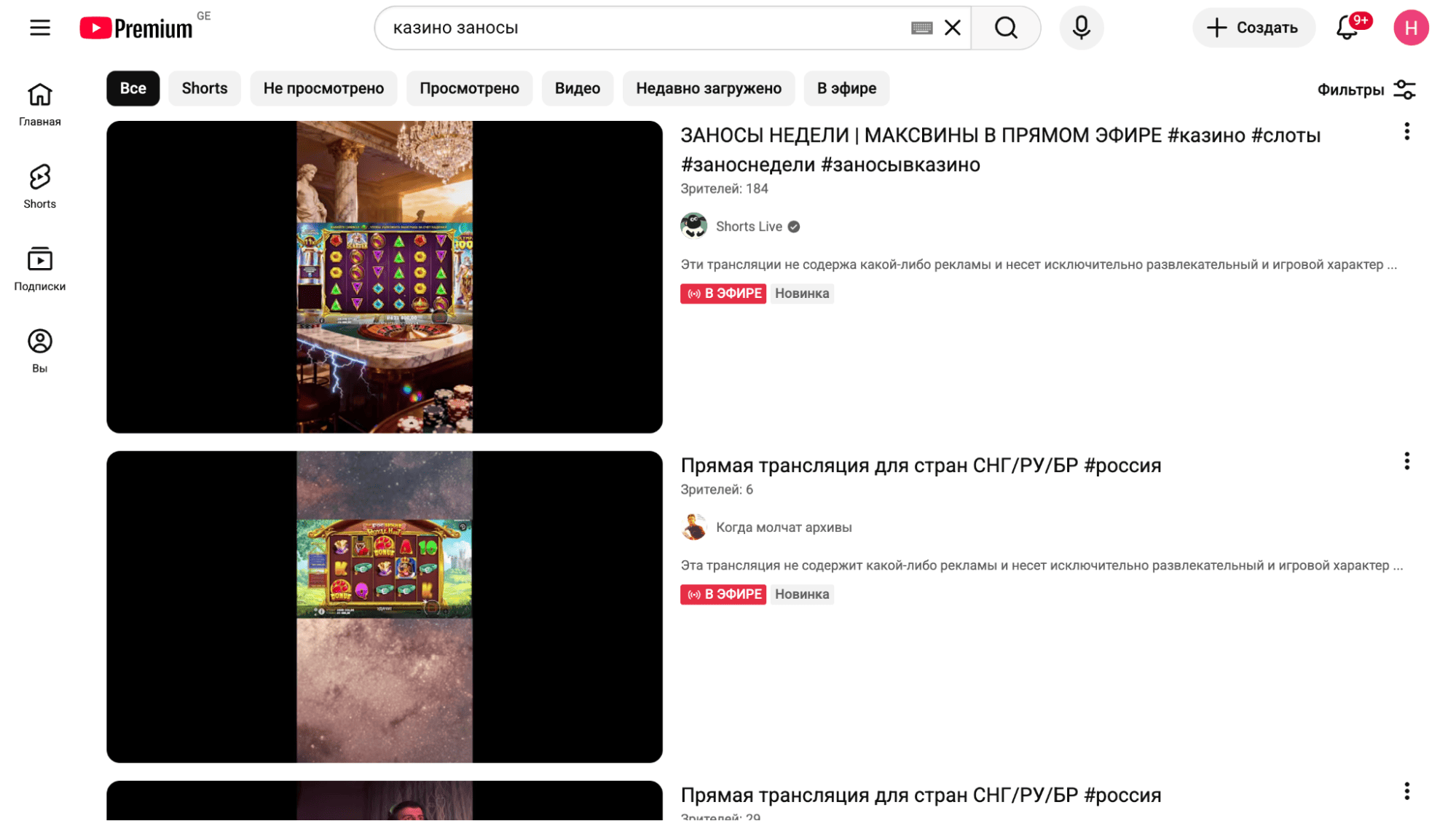
You can find out exactly which videos land in recommendations by searching for "casino big wins". In the filters, select "Live," find an active streamer, and see what videos they used to warm up the channel at the very beginning. Once Shorts consistently gain views over a week-long stretch, the account is considered ready for live streams.
The Feasibility of Manual Warming. Manual account farming takes about two weeks, which heavily limits the number of launches when working solo. Over the long run, this approach consumes too much time that could otherwise be spent working on the funnel itself.
Considering that high-quality aged accounts with a history cost just a couple of dozen dollars, it is much easier to use ready-made solutions. Buying an account allows you to skip the two-week warming period and immediately proceed to uploading videos to test reach.
TikTok Specifics: Registration and Trust
TikTok tracks the technical parameters of the device, so using an antidetect browser is not enough for live streams. Streams are launched through TikTok Live Studio.
The software reads hardware data, so a separate Windows VDS is rented for each profile. The setup utilizes residential proxies and smartphones without SIM cards. This allows you to avoid being tied to your home region and get views in the target GEO.
GEO Transfer Method. Accounts are registered via countries with lenient moderation, such as Kazakhstan, Vietnam, or Georgia. After creating the profile, you wait 24 hours and switch the settings to the target region. Before going live, user activity is simulated on the account: scrolling through the feed and subscribing to gaming channels.
Entry Threshold for Broadcasts. To gain access to live streaming, you need to reach 1,000 subscribers. Building this audience manually takes up to several weeks and does not yield consistent results.
Considering proxy costs and warming time, it is more profitable to buy ready-made accounts. Profiles with livestream access cost a couple of dozen dollars, allowing you to immediately proceed with technical setup and launch streams without a two-week warming period.
Methods for Bypassing Automated Moderation
Platform algorithms look for gambling triggers in both the video and audio. To prevent the stream from getting banned instantly, technical masking and stop-word substitution are used.
Launch Masking. Moderation checks the stream immediately after launch. If you open a casino in the first minutes of the stream, the account will be banned before hitting recommendations. Start the stream with neutral gameplay—Minecraft or Subway Surfers. As soon as the first viewers join the broadcast, switch to streaming slots or crash games.
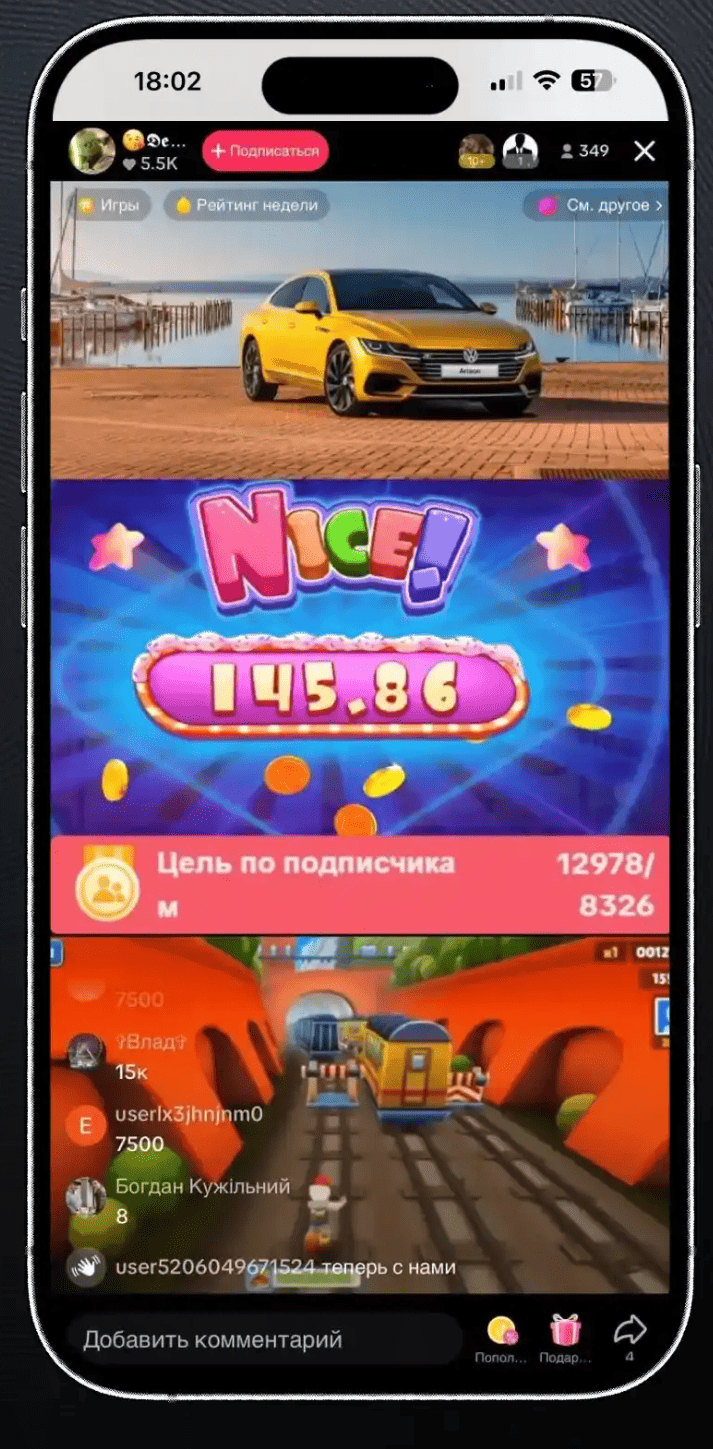
Overlaying Interface Elements. Anti-fraud systems recognize currency symbols and brand names. These zones are covered with text overlays or blurred in OBS. Additionally, select slots that do not display currency signs on the main screen. This prevents moderation from identifying the casino theme based on visual markers.
Speech Filters and Audio Adjustments. Words like "casino," "deposit," and "bonus" trigger moderation. During the broadcast, replace them with "platform," "top-up," and "win/hit." Additionally, layer background music or alter your vocal timbre using Clownfish or VST plugins to make speech recognition less effective.
Using RTMP Servers. A custom RTMP server (for example, based on Nginx with the rtmp module) acts as a node to unique-ify the video stream. The feed from OBS goes first to this server, where ffmpeg scripts dynamically alter the bitrate, overlay noise, or apply color filters.
For the platform, each such stream looks unique, which is crucial when operating networks of accounts. In the event of a ban, the buyer simply changes the Stream Key in the server settings, redirecting the video to the next account. This keeps the broadcast running smoothly without wasting time rebuilding scenes in OBS on a local PC.
Conclusion
Streaming is an effective tool for acquiring traffic, where the result depends on volume and the technical literacy of the media buyer. The main difficulty here lies not in finding content, but in maintaining the lifespan of an account network and bypassing moderation filters. Using RTMP servers and appearance-altering software allows you to automate the process and scale the setup without being tied to a specific individual.
At the same time, the broadcast acts as a warm-up phase before funneling the audience into Telegram. Without a high-quality content plan in the messenger and regular posts highlighting big wins, streams won't yield a high LTV or stable deposits.