The video has been edited, made unique and uploaded at the right time, but the view counter is stuck at 200. The next video, created using the same approach, gets zero views. A familiar situation for everyone working with short-form videos, from organic traffic marketers running networks of accounts to bloggers managing a single channel.
Reach on short-form videos is indeed declining. According to a Metricool study covering around one million accounts, Reels reach dropped by 35% over the year. Platforms have tightened their filters against duplicate videos, generic AI-generated content and accounts with no history. As a result, content that went viral a year ago now often struggles to get past the first hundred views.
Many people immediately blame a shadowban in this situation. In practice, shadowbans are less common than they seem, and the cause is more often a specific mistake: in the video itself, the account or the technical setup.
To help you understand what went wrong, we've broken down the common reasons for low reach on Reels and Shorts, separately covered the mistakes that most often prevent videos from taking off, and shown how to identify the stage at which a video loses viewers.
How Reels and Shorts decide who sees a video
Instagram and YouTube use similar content distribution systems. First, a video is shown to a small group of people, and the platform monitors their reactions. If viewers don't swipe away in the first few seconds, watch until the end, rewatch and share the video with friends, it gets pushed to the next, larger audience. If engagement drops at any stage, distribution stops. That's why it's common to see a video quickly reach its first 300–500 views and then come to a complete stop.
The main thing the algorithm looks at — is whether the video holds viewers' attention. Likes and comments also matter, but they carry less weight than video completions. On Instagram, shares through direct messages are another strong signal: when people share a video, the platform is more willing to show it to users who don't follow you.
You can usually see how a Reel will perform within the first day or two. If it hasn't gained momentum during that time, it most likely won't take off later.
Shorts have a longer lifespan: a video can sit without gaining views for weeks and then start getting traffic from search or recommendations. So if other videos on your channel are getting views normally but one is stuck, don't rush to delete it.
And don't rely on the view count displayed under a Short. YouTube counts a view as soon as the video starts playing, even if the viewer swipes away after one second. A video may show a couple of thousand views, while almost nobody actually watched it.
Common reasons why Reels and Shorts don't take off
Most reach-related problems are the same on both platforms. Before looking for issues specific to a particular social network, check your video and account against these points.
Weak hook
Viewers decide whether to watch a video or keep scrolling within the first one or two seconds. If the video starts with a greeting, a long introduction or a static shot, most people will swipe away before they even understand what it's about. The algorithm detects widespread swiping and stops promoting the video.
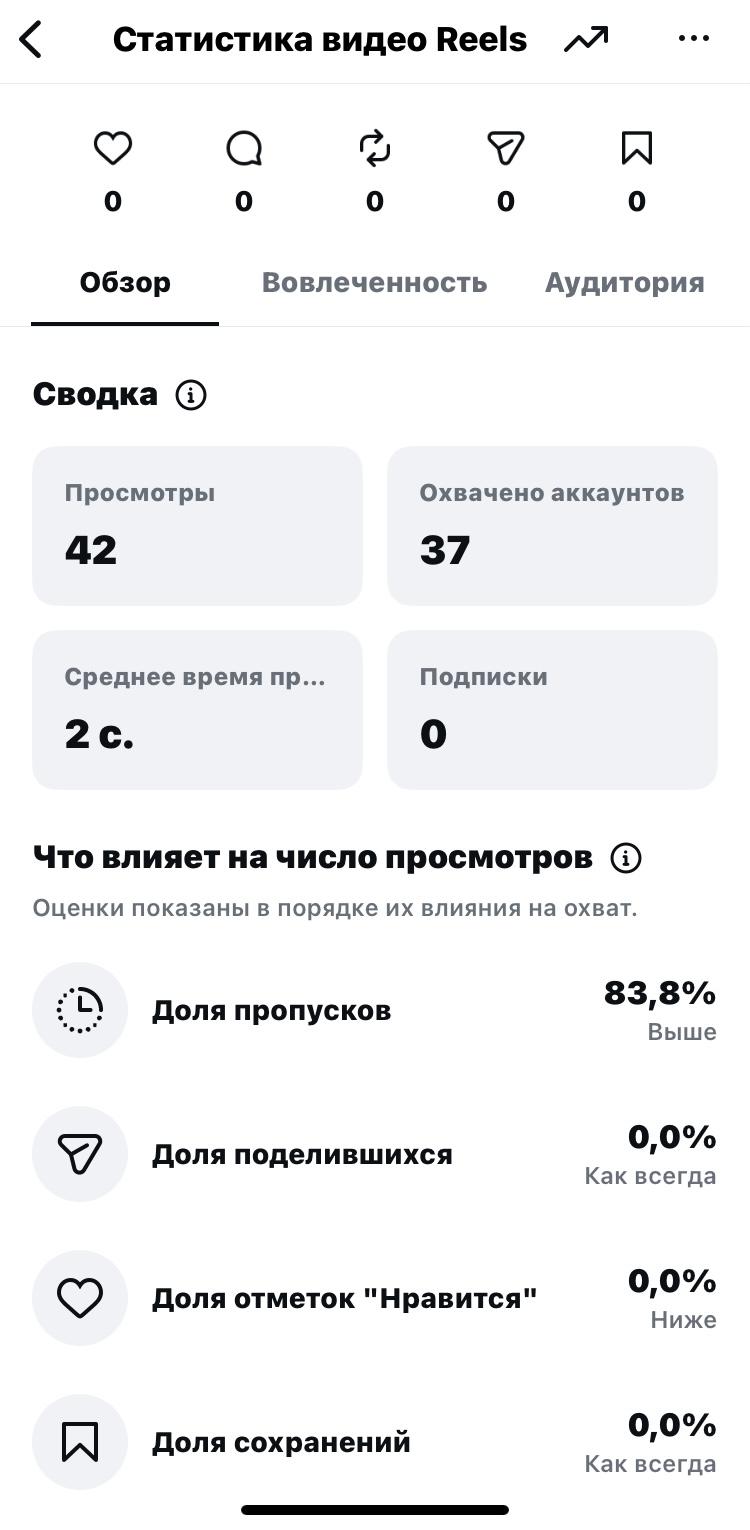
You need to start with the strongest moment: a result, conflict, question or striking shot. If you work with video compilations, put the most engaging segment at the beginning. Short text on the first frame explaining why viewers should keep watching also works well. It's easy to check whether the hook is the problem: the video's analytics show what percentage of viewers swiped away immediately. If more than half did, rework the beginning of the video.
Viewers don't watch until the end
The hook worked, but people still leave after five seconds. Often, the reason is simply that the video is longer than necessary: an idea that could be explained in 15 seconds has been stretched to a minute with added pauses and repetitions. The more unnecessary seconds there are, the more reasons viewers have to leave.
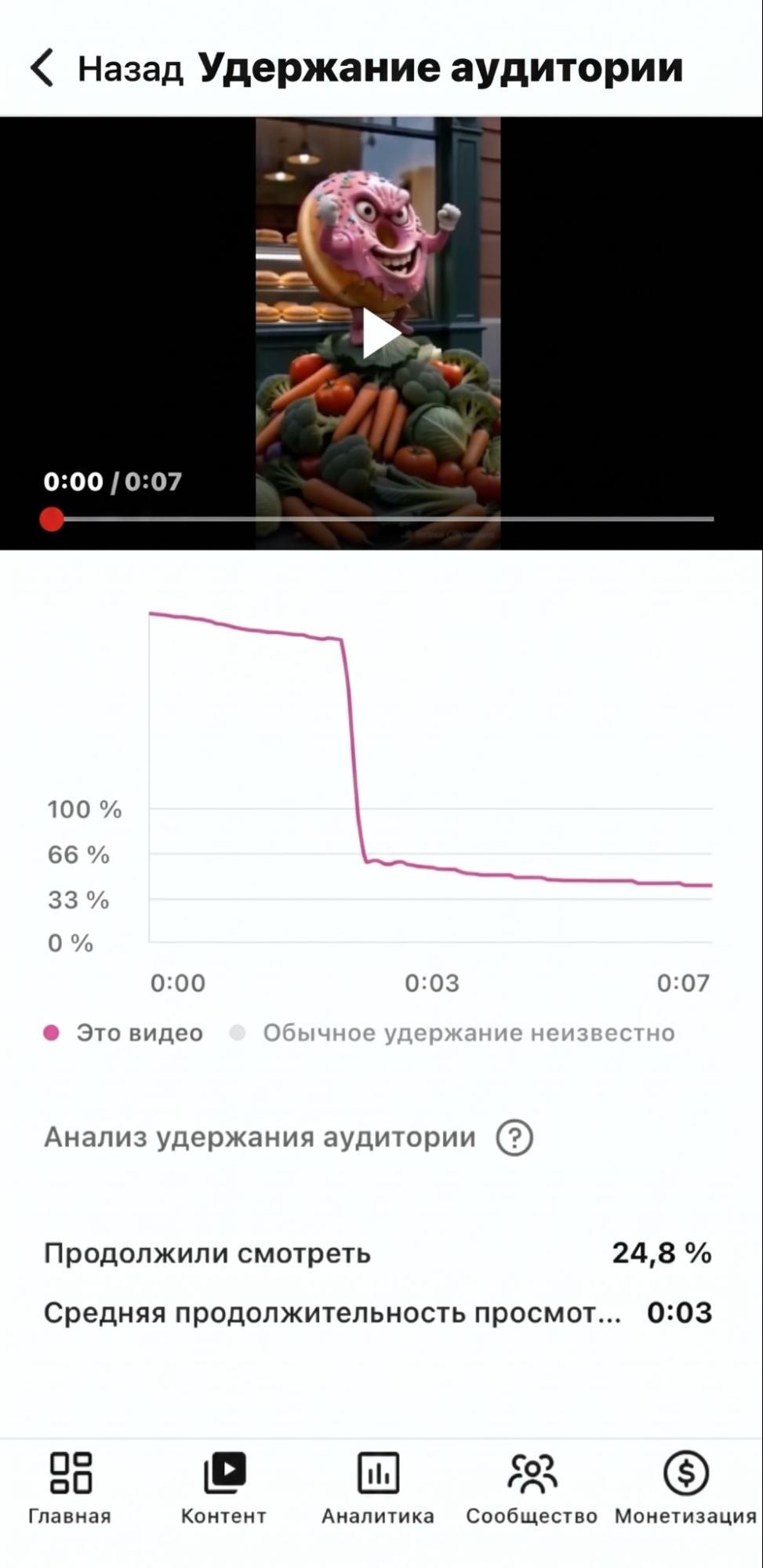
Pay attention to the ending as well: if the beginning promises something but the ending delivers nothing, people start clicking «Not interested», and the account's next videos receive fewer impressions. You can see exactly where viewers leave on the audience retention graph: look for sharp drops and cut out those sections.
Non-unique content
One of the most common reasons for zero views across account networks. Instagram and YouTube compare a file's digital fingerprint: its hash, metadata, video track and audio track. If the same video is uploaded to several accounts or someone else's video is reuploaded, the platform detects the duplicate. There are no bans or warnings; the video simply isn't shown to anyone.
For people managing several accounts at once, this is a classic situation: the accounts are fine, the proxies are fine, but the entire network gets zero views. Change the video file itself, and views return. That's why simply mirroring a video and slightly cropping its edges isn't enough. Everything needs to be made unique: the footage, audio and metadata.

Since early October 2026, YouTube has been restricting impressions more aggressively for channels that reupload other people's videos with almost no changes. Video compilations can still take off, but only if they include something original: voiceovers, commentary, different editing or a different presentation.
Low-trust account and poor technical setup
If videos on a fresh Instagram account with no history consistently get zero views, the problem often isn't the content. The platform doesn't yet understand what kind of account it is and doesn't give it proper exposure. There's a simple way to check: on the third or fourth day of warm-up, upload a neutral video without any advertising. If it gets no views, the profile has low trust or proxy-related issues.
The situation with Shorts is similar, except that the platform evaluates the entire channel rather than an individual video. Out of ten newly registered accounts, usually only 4–6 channels generate decent traffic. If every video on a channel still has zero views on the second or third day of uploading, the problem is no longer the content: the channel simply isn't getting distributed, and building its reach will take a very long time. It's easier to replace such channels. That's why many people immediately choose warmed-up accounts with history: their first videos start getting views without weeks of waiting.
The other half of the problem — is the technical setup. Datacenter proxies, too many accounts on one phone, or using a proxy from one country while publishing content in another country's language: platforms notice all of this and reduce reach. One account — one mobile or residential proxy matching the GEO you're targeting.
Account without a clear niche
The algorithm selects an audience based on the account's topic. If a channel posts memes today, gadget reviews tomorrow and money-making content the day after, the algorithm doesn't understand who should see its videos, and each one starts almost from zero. The same thing happens when you suddenly change niches: the audience attracted by previous videos doesn't respond to the new ones.
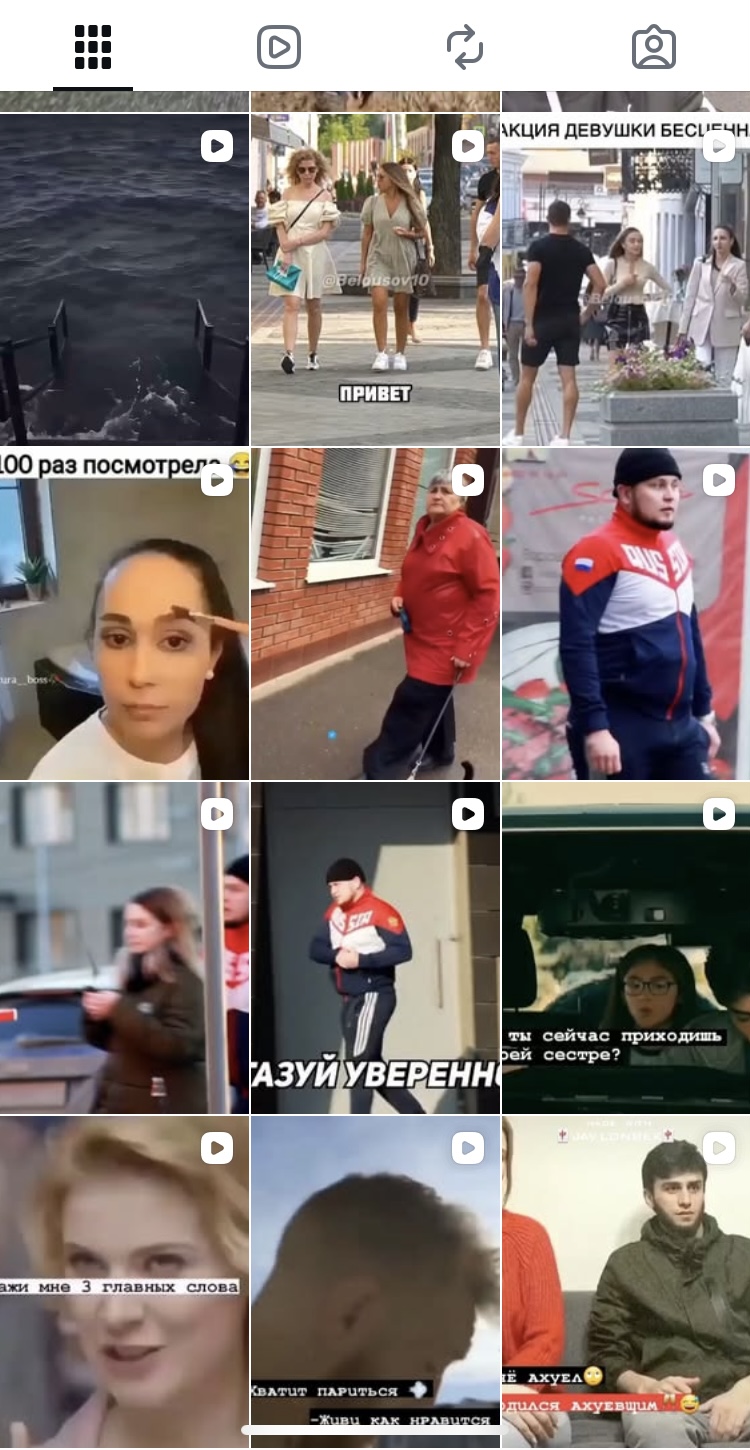
Stick to one topic per account. If you're working with an offer, you should also warm up the account with videos that are at least indirectly related to your future vertical. That way, by the time you start running traffic, the algorithm will already know who should see your videos.
Why Reels don't take off
Instagram has its own pitfalls that can reduce reach even when the content and technical setup are fine.
The account is no longer eligible for recommendations
If an account mainly publishes other people's videos, reuploads and compilations without proper editing, Instagram may remove the entire account from recommendations. Your followers can still see your videos, but they're no longer shown to new audiences. Videos that previously received thousands of views suddenly get stuck at just a few dozen.
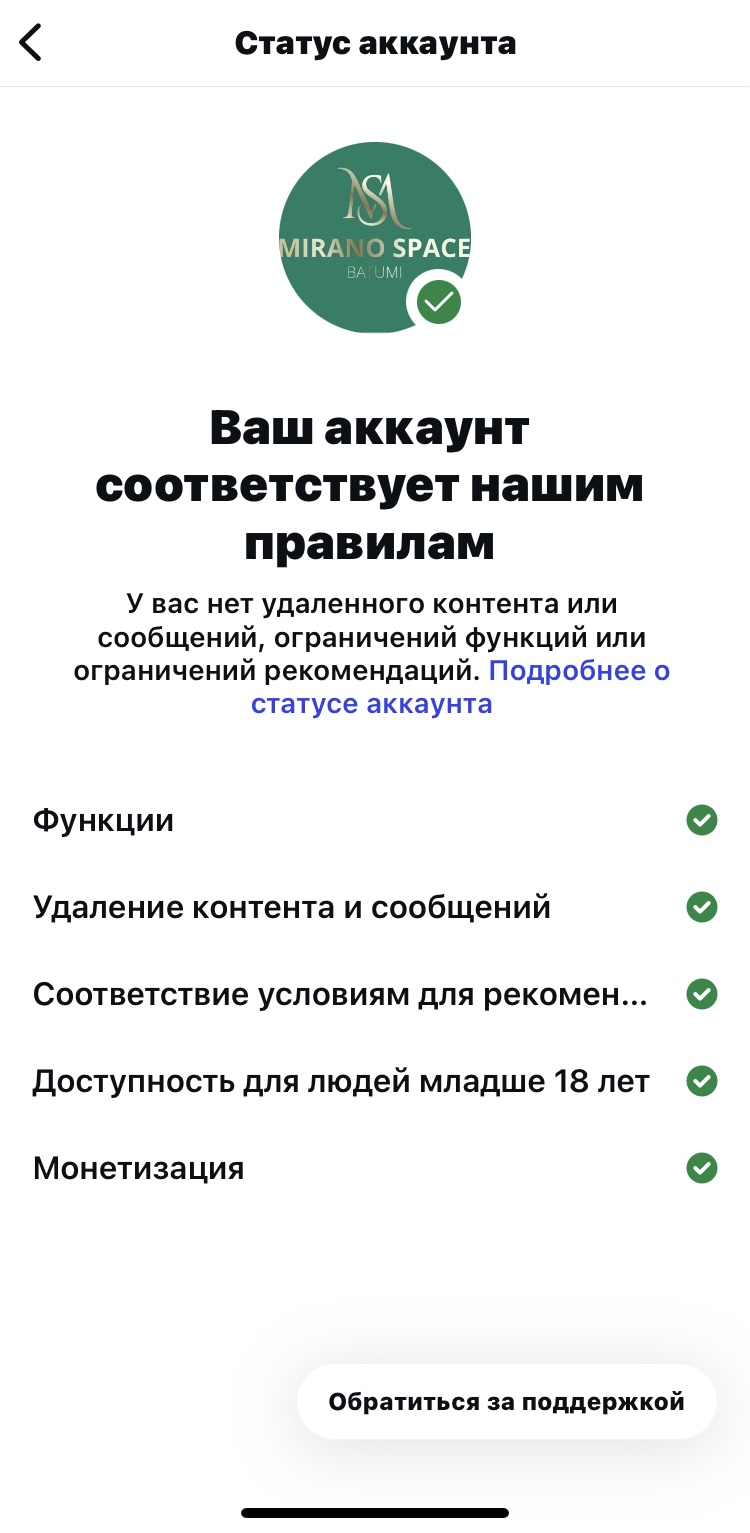
You can check this in the settings under «Account Status». It shows whether there are any recommendation restrictions and which content caused them. It's better to delete problematic videos, and after some time, the account usually starts getting distributed again. A couple of reposts on an account aren't a problem, but when there's more borrowed content than original content, reach drops across all videos at once.
Spam activity at the start
Instagram treats a new account with a sudden burst of activity as a bot. No restrictions are visible: the account works, videos can be uploaded, but they receive almost no impressions. Here's what most often causes an account to get shadowbanned:
-
A link in the bio of an empty profile. Add it only after the first videos start getting views.
-
Mass liking and commenting. For fresh accounts, 5–10 likes per day and a couple of comments are enough.
-
A dozen videos on the first day. Start with one video per day and gradually increase the frequency.
-
Inconsistent posting schedule. If you start uploading 2–3 videos per day, maintain that pace instead of publishing five videos in one evening and then disappearing for a week.
People don't share the videos
For Instagram, shares through direct messages — are one of the strongest signals. When people share a video, the platform is more willing to show it to users who don't follow you, and the video can spread far beyond its original niche. If viewers watch a video until the end and like it, it can still get views without shares, but reaching hundreds of thousands of views will be more difficult.
The most frequently shared content includes:
-
relatable life situations that remind you of yourself or a friend;
-
humor and memes related to the account's topic;
-
useful life hacks that people want to save or show their friends;
-
videos with a «this is so you» kind of message.
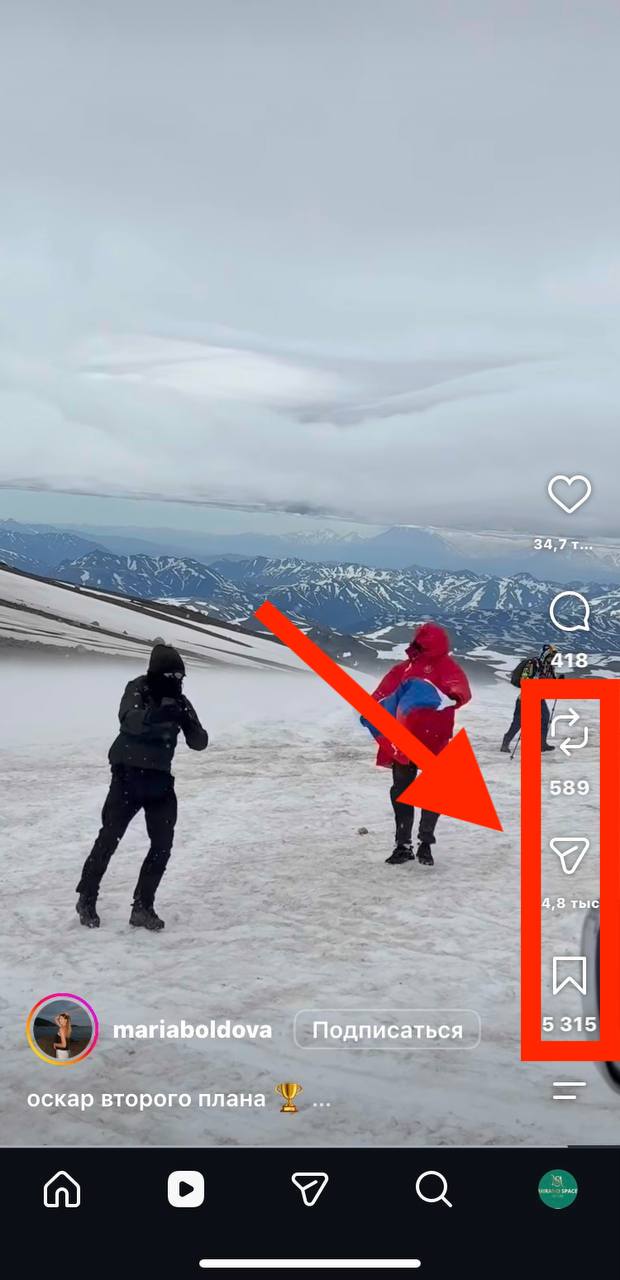
If you want a video to reach a broad audience, think about who viewers might send it to while you're still developing the idea. Even in a narrow niche like fishing, you can find content worth sharing: a funny catch, an unsuccessful trip or a meme about a wife who doesn't understand the hobby.
What else reduces views
Sometimes the content and account are fine, but Reels still receive almost no exposure. The reason may lie in technical details:
-
A video longer than three minutes. You can upload Reels up to 20 minutes long, but according to Instagram's rules, anything longer than three minutes is shown only to followers.
-
A watermark from another platform. Instagram immediately reduces the reach of videos with TikTok or CapCut logos.
-
Low video quality. Blurry footage after compression or a stretched horizontal video looks like a reupload.
-
Black borders around the video and no sound. Instagram also considers these signs of low-quality content.
-
AI character without a label. Since late August, Instagram has been reducing the reach of AI model accounts if the «AI-generated profile» label isn't enabled in the profile settings.
Why Shorts don't take off
YouTube has its own pitfalls: some aren't visible in the numbers displayed under a video, and without analytics, they're easy to miss.
Views without watch-throughs
YouTube counts a view as soon as a Short starts playing. A video may get a couple of thousand views, but most viewers swipe away within the first second. For the algorithm, that's a failure, and the video stops getting distributed, even though the number displayed beneath it looks decent.
You can see the real picture in YouTube Studio, in the analytics for a specific video:
-
Shown in feed — how many times the Short appeared in users' feeds.
-
Viewed / Swiped away — what percentage of viewers stopped to watch the video and what percentage immediately swiped away.
-
Engaged views — viewers who actually started watching.
-
Audience retention — the points in the video where viewers leave.
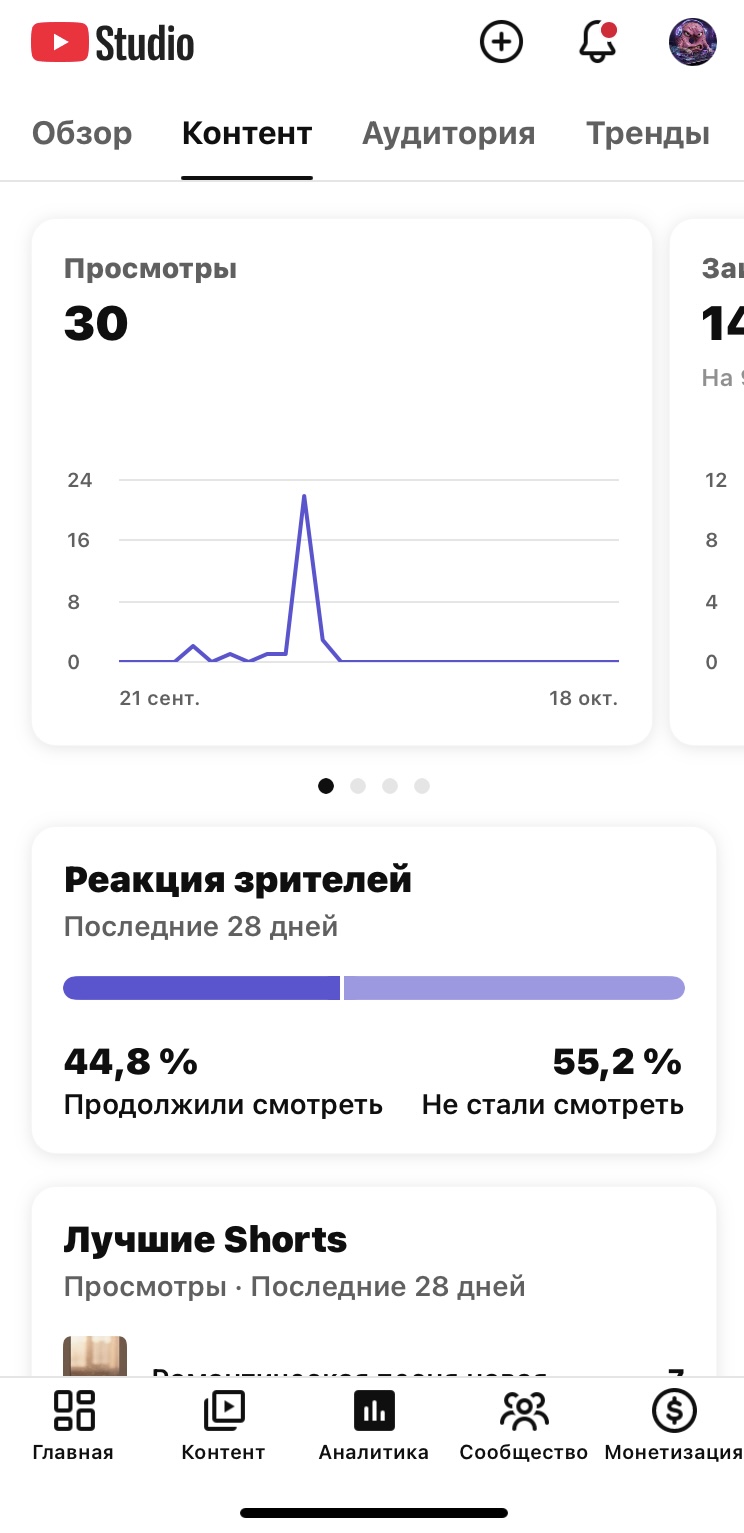
These metrics immediately show the stage at which a video loses viewers. If most people swipe away in the first second, the problem is the hook. If they start watching but leave halfway through, the video is too long. And if impressions are low from the very beginning, the issue is no longer the editing but the topic or the channel itself.
Music and trigger words
Using someone else's chart-topping track can easily result in a copyright claim. At best, the video remains available, but the copyright holder receives the revenue. At worst, the video is blocked or its visibility is restricted. You can check this in YouTube Studio: a video with a claim will have a copyright notice. It's safer to use tracks from the YouTube Audio Library or record your own voiceover. According to many creators' experience, original voiceovers currently perform better than trending sounds.
The second problem — is trigger words. YouTube recognizes speech and subtitle text, and words associated with gray-area verticals, such as «casino», «betting» or 18+ content, can reduce impressions even if the video itself is harmless. If you're driving traffic to gray-area offers, pay attention to the words used in the voiceover and the text displayed on screen.
Repetitive AI-generated content
AI tools have made Shorts production much easier, and YouTube has noticed. A channel with 50 «top 5 facts» videos using the same transitions, the same AI voice and the same structure quickly hits a ceiling: each new video gets fewer impressions than the previous one. The algorithm sees that the videos are almost identical to each other and to content already available on the platform.
AI itself isn't the problem here: the issue is the template. If you generate content, change the presentation from video to video: different voices, topics, structures and visuals. The less your channel's videos resemble copies of one another, the longer the channel maintains its reach.
Links in descriptions and comments
Since 2023, links in Shorts descriptions and comments have not been clickable: YouTube disabled them to combat spam. Viewers can only follow such a link by copying it manually, which almost nobody does. At the same time, videos containing links to suspicious websites risk being restricted for spam. Place the link to Telegram or an offer in the channel profile: it's clickable there and visible next to the «Subscribe» button. In the video itself, briefly explain where viewers can find it.
FAQ
Do shadowbans exist, and how can you check for them?
Officially, neither Instagram nor YouTube acknowledges shadowbans, but in practice, hidden restrictions do exist. The main sign — is a sudden drop in views to almost zero across all new videos, even though previous videos performed normally. On Instagram, first open «Account Status» in the settings: it shows whether there are any recommendation restrictions.
On YouTube, try searching for your latest Short by its exact title from another account or in incognito mode. If it doesn't appear in search even by its exact title after 24 hours, the channel most likely has restrictions.
Should you delete a video and reupload it?
Reuploading the exact same video won't help: viewers will react to it in the same way, and the platform may identify it as a duplicate. It only makes sense to upload a reworked version: with a new hook, unnecessary sections removed and a different presentation.
Do hashtags and descriptions help?
On Shorts, they help with search: videos are now discovered not only in the feed but also through search queries, so a clear title and a couple of relevant hashtags can generate additional views. On Reels, you can add no more than five hashtags, and they help the algorithm understand the video's topic, but not much more. Keywords in the description itself currently work better, as Instagram is increasingly focusing on search.
Can you boost the first views to make a video take off?
Bot-generated views almost never result in complete watches, likes or shares. The algorithm sees many impressions without engagement and concludes that the video is uninteresting, so it stops distributing it. In addition, artificially inflating views — poses a direct risk to account trust: you may receive restrictions affecting the entire profile.
How many videos should you upload per day?
There is no universal rule. Typically, people upload one to three videos per day per account. The important thing is to maintain a consistent pace: on new accounts, start with one video per day and gradually increase the frequency.