Many people think that only musicians with millions of listeners make money on Spotify. In reality, the platform is much more interesting: podcasters, video bloggers and even affiliate marketers come here to attract traffic.
In 2026, there was an excellent reason for this — Spotify expanded its Partner Program to another 35 countries. Now video and podcast creators can earn money from advertising and Premium audience engagement directly on Spotify.
The platform has a huge audience: in Q2 2026, Spotify reported 777 million monthly users and 300 million Premium subscribers.
What can you actually make money from here
There are several ways to earn money. And for half of them, you do not even need to know how to sing or play the guitar.
Track royalties (for those who make music)
Revenue from a track is divided into two parts:
-
for the sound recording itself (the artist and label receive the money);
-
for copyright (payments to the lyricist and composer).
The main restriction — is the threshold of 1,000 streams per year. Spotify introduced this rule to filter out creators who upload generated rain noise or campfire sounds. Once a track passes the threshold of one thousand streams over the past 12 months — it becomes eligible for recording royalties. This rule does not apply to publishing royalties.
Videos and podcasts (Spotify's own Partner Program)
The model here is very similar to YouTube:
-
The platform itself inserts short advertisements into your episodes and gives you a share of the revenue from impressions.
-
The service pays extra based on how much time subscribers with Premium spend watching your videos.
-
You can create exclusive paid episodes — listeners subscribe to your podcast for a fee.
Playlists (for those who know how to attract an audience)
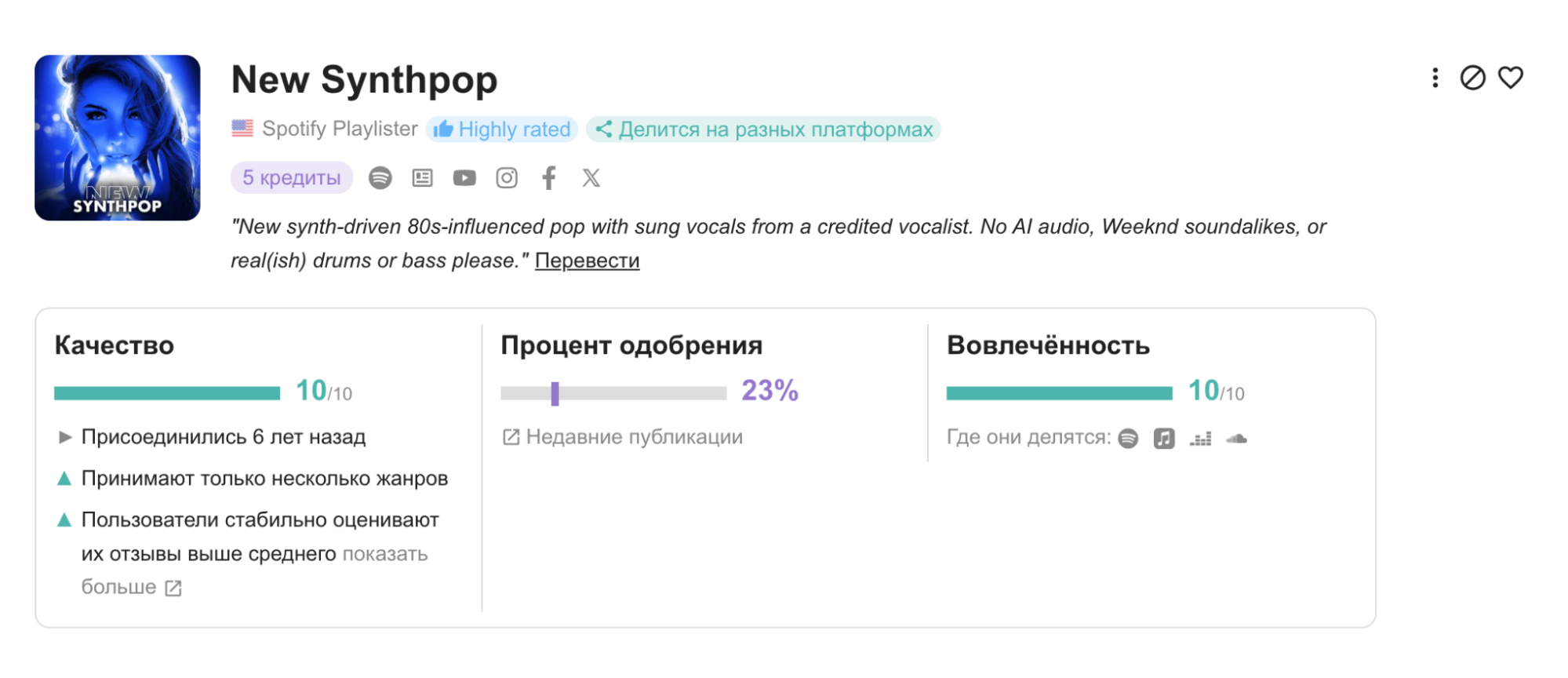
You create and promote music collections for sports, work or relaxation. Selling placements in playlists directly is prohibited by the rules. However, you can register on platforms such as SubmitHub: emerging musicians submit their releases for review, and you receive money for listening to tracks and giving feedback to the artists. If a track is worthwhile — you add it to your playlist; if not — you leave feedback and receive payment for the review.
Affiliate marketing (CPA offers)
Spotify can be used as an organic traffic source for affiliate programs. Podcast and audio show creators place clickable referral links and promo codes directly in episode descriptions. White-hat subscription services, software, financial products, educational platforms and books convert best here.
Buying advertising through Spotify Ads
Through the official Spotify Ads dashboard, you can launch audio ads with a clickable banner and video ads. The advantage of this source — is access to a mobile audience with purchasing power in Tier-1 countries. Targeting is configured by GEO, age, devices, music preferences and context: what the user is doing while listening (working out, driving, studying). Advertising traffic is directed to external landing pages and affiliate offers.
Merchandise and tickets
If your music or podcast has already attracted loyal fans, your Spotify profile can be turned into a storefront. The creator profile has built-in integration with Shopify and ticket-selling services. Listeners buy physical products, records or event tickets directly from the app without unnecessary redirects to third-party browsers.
Music: how royalties and playlists work
No one can upload music to Spotify directly from a computer, like uploading a track to a social network or a video to YouTube — neither a beginner with their first melody nor a global superstar. The platform does not accept files from individuals to avoid dealing with piracy and stolen tracks. It is easier for the streaming service to work through intermediary services that check tracks for authorship themselves.
Music reaches the platform only through official intermediaries — distributors (DistroKid, TuneCore, ONErpm and others). You register on the website of such a service, upload an audio file and cover artwork, and the distributor assigns digital codes to the track and uploads it to your artist profile on Spotify. For their services, these platforms charge either a fixed annual subscription or a small percentage of future royalties.
Once the track appears on the platform, royalty calculation begins.
How much Spotify pays per stream
Spotify does not have a fixed rate per stream. Payments depend on who listens to you and where they are from. This amount constantly changes for two reasons:
-
Listener's country. Streams from the US, UK or Germany generate several times more revenue than streams from Brazil, Turkey or India. The more expensive a subscription is in a country, the more the service pays per stream.
-
Subscription type. A stream from a listener with a Premium subscription generates noticeably more revenue than one from a free user.
As for the threshold of 1,000 streams: if a track has not reached it over the past 12 months, no recording royalties will be paid. Therefore, simply uploading a track and hoping for a miracle makes no sense — a release needs an initial push at the start.
How to get your track its first streams
To prevent a track from getting lost and get people to start listening to it, there are three working methods:
Pitching to Spotify editors
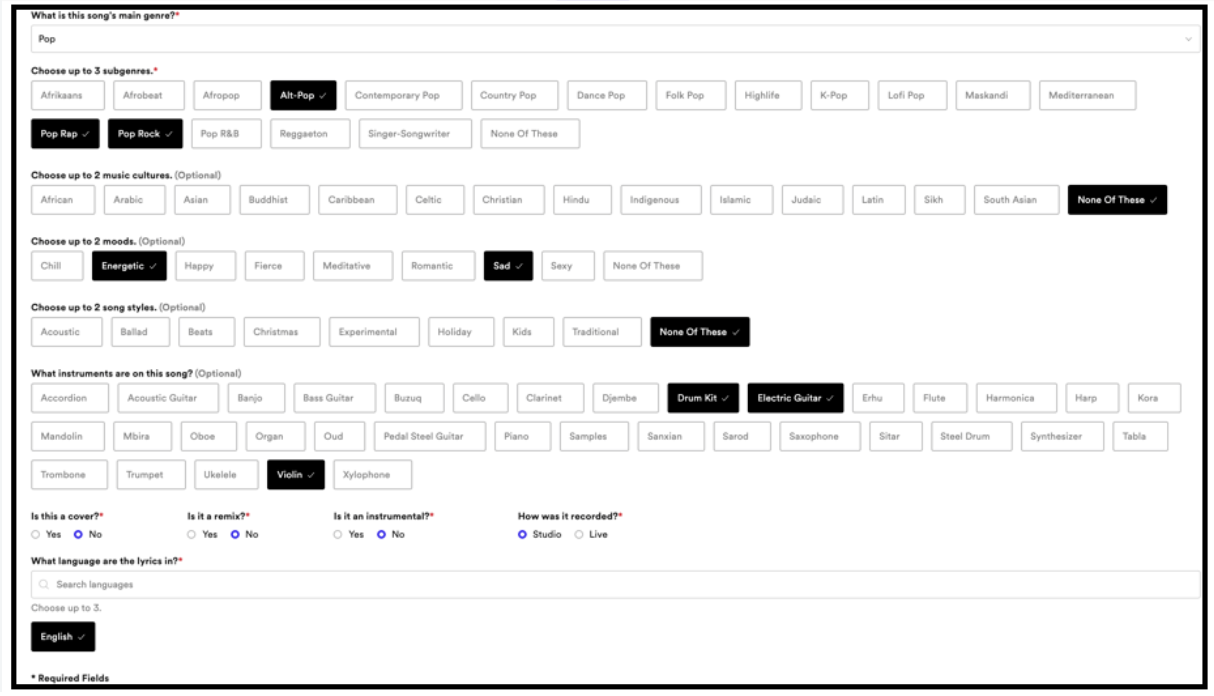
After uploading a track to your distributor, it appears in your Spotify for Artists dashboard with the status «upcoming release». One or two weeks before the release, you can submit a pitch to the service's editors: specify the genre, mood of the track and add a short description. If the editorial team is interested in the track, it may be added to an official Spotify playlist, which will bring a noticeable increase in streams.
Recommendations and personalized playlists
As soon as a track gets its first active streams, the algorithms come into play. If people do not skip the song in the first few seconds, listen to it until the end and add it to their libraries, Spotify starts recommending it to similar listeners in the «Discover Weekly» and «Release Radar» playlists.
Other people's playlist curators
Many users do not search for music directly but play other people's playlists that match their mood or serve as background music. The owners of such playlists can be found on platforms such as SubmitHub or Groover. You cannot pay directly for playlist placement, but on these websites you can submit a track to a curator for review. They listen to the track, write detailed feedback and, if the track fits the format — add it to their playlist.
Podcasts and videos: how to join the Spotify Partner Program
While music requires a distributor, podcasts and videos can be uploaded directly. There is a separate free dashboard for this — Spotify for Creators (formerly Anchor). You can register there and upload audio or video files directly from your device.
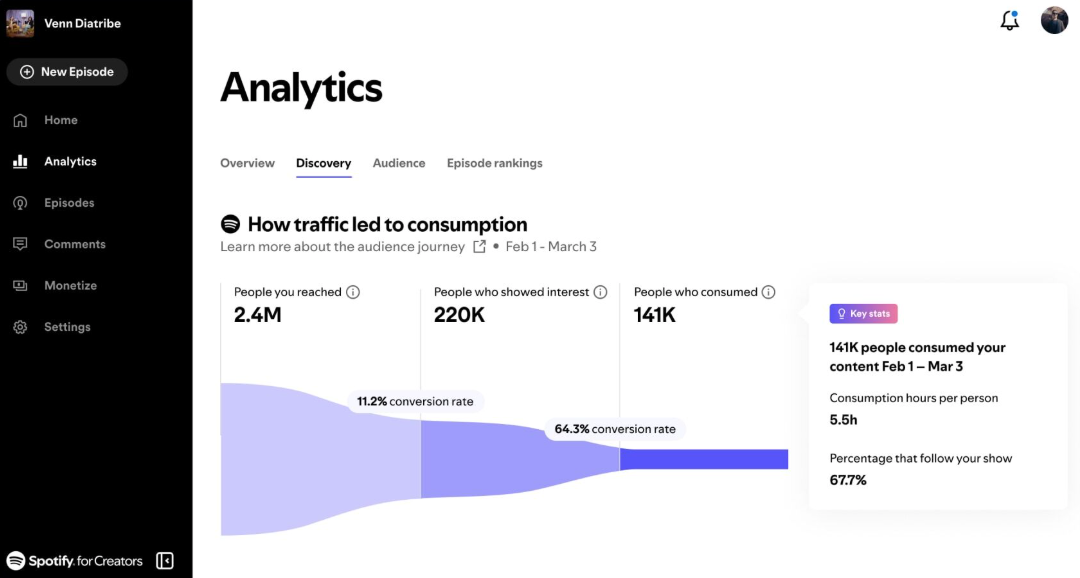
To enable payouts from the service, a podcast must have at least 3 published episodes and, over the past 30 days, must reach:
-
at least 1,000 unique listeners;
-
at least 2,000 hours of listening or viewing time.
The main restriction — is GEO. Payouts can only be enabled in countries where the program has officially launched — in other regions, the monetization button simply will not appear.
How to work with traffic: organic traffic, UBT and external setups
Direct payouts from the platform — are only part of the opportunities. Streaming is often used in setups with other sources: to attract new listeners or, conversely, redirect a warmed-up audience to external offers.
Where to bring people to Spotify from
Waiting for help from the service's algorithms alone takes a long time. To gain streams and viewing hours for monetization faster, external platforms are used:
-
Short videos (TikTok, Reels, Shorts). The most effective method for music and podcasts. A clip of a memorable moment from a conversation or a trending sound in a video brings people to the streaming profile. A multi-link is placed in the profile bio, opening the required episode or track directly in the app.
-
Telegram and other social networks. A post in a niche channel with a link to an episode immediately brings engaged people who will listen to it until the end.
How to redirect traffic from Spotify
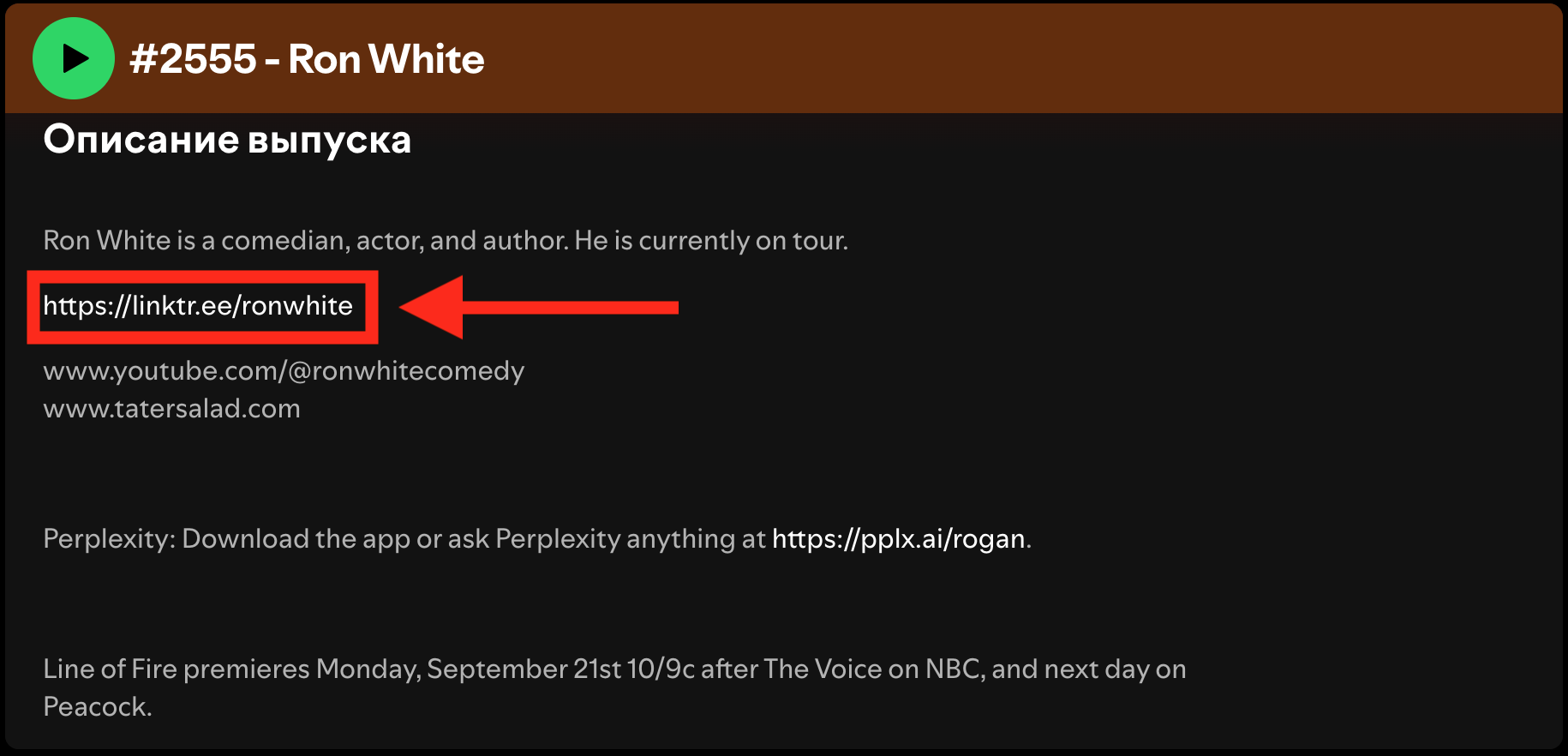
Streaming audiences readily follow useful recommendations. The main tool for this — is the episode description section (show notes).
Unlike music tracks, podcasts allow active links. You can place referral links to services, promo codes for CPA affiliate programs or links to your Telegram channels, where the audience is monetized further.
Getting started and profiles
To test setups or launch your own project, you can register a profile from scratch and gradually fill it with content.
If you are targeting a specific country or want to join the Partner Program faster, it is easier to get ready-made accounts. A profile with the required GEO, aging period and history saves you the routine of registration, so you can avoid spending time on warm-up and immediately start testing setups, publishing content or building playlists.
AI-generated music, bots and account blocks
Spotify does not prohibit creating content with AI. You can generate a song in Suno or Udio, use AI vocals or create a podcast episode with an AI-generated voice. Such content can be published on the platform. The main thing — is not to use other people's voices or protected samples in the track. Problems begin when AI is used to imitate a specific artist without their permission.
In 2026, Spotify also added AI Credits for tracks and an AI Persona label for profiles where the artist's entire persona is created using AI.
Artificially inflated streams and bots: why this does not work
But Spotify does not tolerate artificially inflated streams. If the service detects bots or suspicious activity on a track, those streams will simply be removed.
There is one more thing: Spotify may fine a distributor for tracks with artificially inflated streams. That is why distributors do not want bots on your releases either. If artificial streaming is detected on your release, you may have problems not only with that track but also with your account.
FAQ
How do you withdraw earned money?
-
Music royalties are withdrawn through your distributor's dashboard. Distributors transfer funds to bank cards, bank accounts or through payment services.
-
Spotify for Creators Partner Program payouts come directly from the platform through a linked Stripe account or bank transfer (depending on the country of registration).
When does the first money from streams arrive?
Stream and royalty data arrives with a delay. The exact timing depends on the distributor: first, they receive a report from Spotify and then display it in your dashboard.
Can you upload a remix or cover of someone else's song?
A cover (if you re-recorded someone else's song with your own music) can be released, but it may require additional licenses to use the composition. The terms depend on the country and distributor, so it is worth checking their cover song rules before uploading.
Will your account get banned if people skip a song?
Skipping a track is not a violation in itself. But if listeners regularly skip the audio in the first few seconds, the platform's algorithms will decide that the content is uninteresting and stop recommending it in playlists.
Do you need to pay for the Spotify creator account itself?
Spotify for Artists and Spotify for Creators dashboards are free. Only external intermediaries charge money: music distributors charge an annual subscription or a percentage of royalties, while curator submission services such as SubmitHub charge fees for submissions.