Running gambling traffic through mobile apps using the traditional approach is becoming more expensive and difficult every month. Constant bans on Google Play and the App Store, broken links, failing push notifications and regular waves of Facebook restrictions burn through budgets in the first few days, while campaigns are still struggling to gain traction. Just to test a campaign setup at scale, a media buyer often needs to allocate $3,000 to $5,000.
Against this backdrop, more teams and solo affiliate marketers are turning to scheme-based and influencer traffic with funnels built around Telegram. The reason is control over the audience: users don't leave for a third-party app but instead become part of your own audience base.
A user subscribes to a channel or starts a bot, where they can be gradually guided toward their first deposit and encouraged to make additional deposits. At the same time, a campaign setup can be tested with a budget of $300–500, while the statistics immediately show the cost of each click, subscriber and message.
In this article, we'll examine how scheme-based traffic works today: where the real boundaries lie between schemes, white-hat influencer traffic and incentivized traffic, why teams are replacing human chat operators with AI bots on a large scale, and how to build a campaign setup so that advertisers consistently approve traffic caps without cutting payouts during reconciliation.
Schemes, influencer traffic and incentivized traffic: how the approaches differ
At conferences, almost nobody uses the word «schemes». Affiliate marketers and affiliate network managers prefer to call this approach influencer traffic because advertisers readily approve caps for advertising through bloggers but are cautious about any schemes promising to beat gambling platforms. In practice, however, these are three completely different approaches.
With white-hat influencer traffic, advertising is promoted through a real person. This could be a blogger, a streamer on Twitch or a public figure. They host a livestream, play slots and give viewers a promotional code for a bonus or a referral link.
There are no promises of guaranteed winnings or secret algorithms. Users visit the website understanding that they're participating in gambling and make deposits for entertainment.
With scheme-based traffic, audiences are attracted by promises of making money or methods for bypassing casino algorithms. Players are offered bots that predict outcomes in crash games such as Aviator, specific bet-increase strategies, or claims that a vulnerability in a particular slot provides higher returns at certain times.
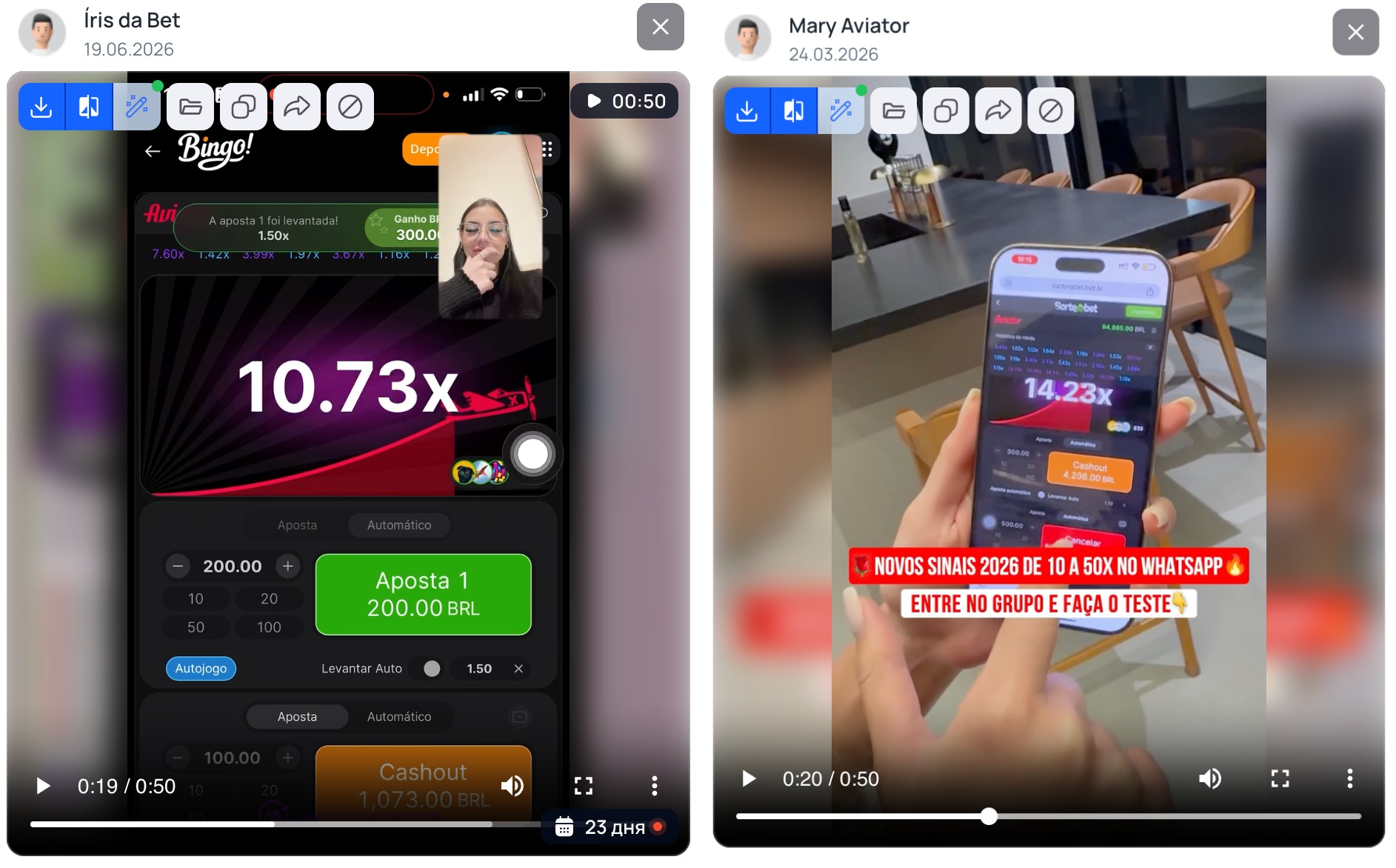
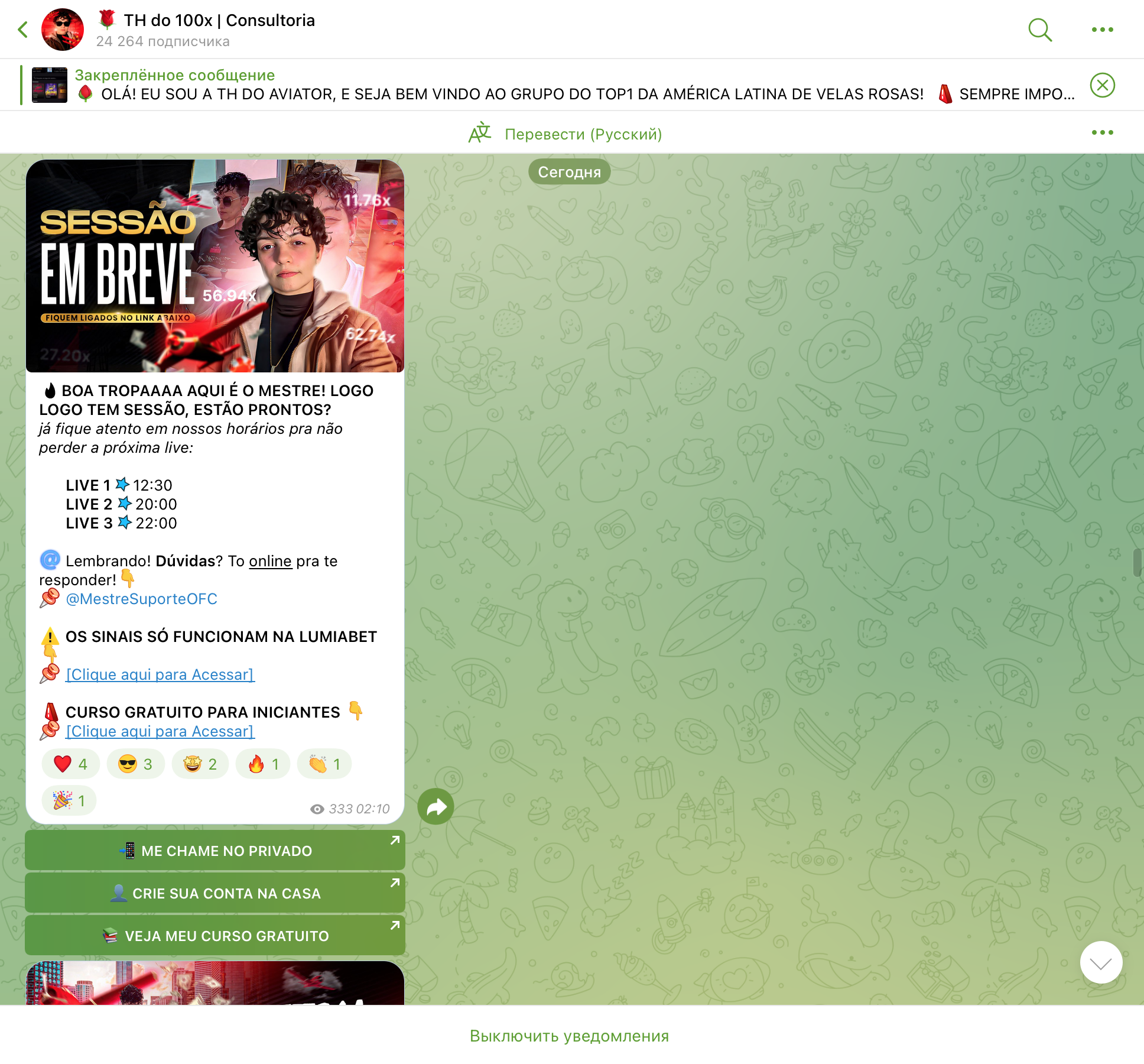
Users click on the ad not for the excitement of gambling but to make money. Traffic from ads is directed to a Telegram channel or chatbot, where reviews and balance screenshots are published alongside step-by-step instructions explaining where to register, how much to deposit and which buttons to press in the game.
Incentivized traffic works differently, although beginners often group it together with schemes. With incentivized traffic, the affiliate marketer directly pays someone to complete a target action: for example, asking them to deposit 500 rubles and promising to transfer 1,000 rubles to their bank card in return.
For casinos, this traffic is completely useless. Users arrive only to receive the guaranteed payment from the media buyer, have no intention of continuing to play and leave immediately after depositing. If the advertiser detects incentivized traffic, the account is immediately blocked and the earnings are not paid out.
With schemes, the situation is different: nobody pays users to register. They deposit their own money, expecting to win by following the instructions from the channel. If, after losing their first deposit, someone explains the reason for the failure convincingly and offers another strategy, the player may make a second or third deposit. That's why this traffic can be profitable for casinos, unlike direct incentivized traffic.
At the same time, the schemes themselves have changed significantly in recent years. The old story along the lines of «I was fired from a casino, and now I'll tell you how to get revenge on the company» no longer works. Players no longer believe these formulaic stories, and advertisers disconnect media buyers immediately after reviewing their first deposits.
Pavel Beynya, owner of the Chatterfy CRM, discussed this difference in detail on a podcast on the Gambling.pro channel. Instead of stories about hacking slots, teams now create private channels featuring betting strategies or hire real actors who record video reports, show stacks of cash and regularly communicate with their audiences through Telegram video messages.
On the surface, such a resource looks like a personal blog, but in reality, players are offered clear instructions or a strategy promising high returns, while a bot or chat operator immediately starts communicating with them through private messages. They guide users step by step through creating an account and depositing money, then encourage additional deposits if the first one is lost.
Entry costs and economics: why schemes are easier to start with
When driving traffic to mobile apps or PWAs, campaigns are optimized for complex actions: installation, registration or the first deposit. For Facebook to learn how to find people willing to download an app and deposit money, each ad set needs to accumulate dozens of target events.
As a result, impressions in the advertising auction become expensive: when testing a campaign setup in Tier-1 or mid-tier GEOs, a media buyer may spend $1,500 to $3,000 before the campaign even reaches profitability.
If an app is banned from Google Play or a PWA loses its domain, the pixel loses its accumulated optimization data, push notifications stop reaching players, and testing has to start again with a new link.
With schemes, advertising is optimized for a simple action: visiting a pre-landing page and launching a Telegram bot. For Facebook, this is a quick and straightforward event, so the auction can find the target audience without a lengthy learning phase, and impressions cost noticeably less.
The main difference is what happens to the user afterward. If someone installs an app and closes it without making a deposit, the media buyer can no longer contact the player directly. The only way to bring them back to the casino is through push notifications, which many users immediately disable on their phones.
With the scheme-based approach, however, users remain subscribed to the Telegram channel. Through posts and periodic bot messages, they can be further warmed up with reviews, videos showing winnings and betting instructions without paying for additional Facebook impressions.
That's why testing a scheme-based approach requires a much smaller budget. Khamzat Nurlykhanov, owner of the TrafaRed team, shared actual cost figures in a podcast on the Practical Arbitrage channel.
He discussed the terms of an offer targeting Morocco: the advertiser provides a test cap of 50 deposits at a payout of $35 each, meaning the affiliate network pays $1,750 for completing the target volume. According to his team's experience, generating those 50 deposits with this setup required just $300–350 in advertising expenses.
If a campaign setup doesn't produce the expected results, the media buyer risks only a small amount and can immediately identify where users drop out of the funnel: how much each subscriber costs, what percentage of the audience moves into private messages and at which question the conversation ends. With mobile apps, identifying the reason for poor performance without substantial testing expenses is much more difficult.
How to connect Facebook with Telegram: pre-landing pages, trackers and conversion tracking
You cannot place a direct Telegram link in Facebook ads. The social network's moderation system frequently blocks such links. In addition, without an intermediary website, it's impossible to send conversion data back to the pixel. That's why advertising campaigns are launched through a pre-landing page.
The main challenge — is correctly tracking the target action in Facebook. If you optimize a campaign for a simple click on a pre-landing page button, the algorithm will attract irrelevant users, since people might accidentally tap the screen or close the tab before Telegram even opens.
This problem can be solved by integrating the bot with a tracker through the Conversion API. Khamzat Nurlykhanov, owner of the TrafaRed team, explained this setup in detail in a podcast with Denis Denisenko. When a user enters Telegram and presses the «Start» button, the bot sends an event to the tracker, which then sends the confirmed conversion to the Facebook Pixel through the API.
As a result, Facebook's algorithm learns only from users who actually opened the messenger and started the bot. This allows the campaign to optimize consistently and reduces the risk of bans caused by suspicious links.
In the bot's first message, a mandatory subscription check for the main Telegram channel should be configured before providing strategies or signals. This keeps users connected in two places at once: in the bot's database for future messages and in the channel itself, where the audience is further warmed up with reviews, instructions and videos showing winnings.
Traffic handling: why teams are replacing human operators with AI bots
After users enter Telegram and start the bot, they need to be guided toward registration and making a deposit. Previously, teams hired chat operators — people who managed conversations manually using prepared scripts.
The main problem was the human factor and response speed. If a user sent a message and the operator replied only half an hour later, the person would close Telegram and forget about the conversation. Under these conditions, very few users ended up making a deposit.
In addition, when driving traffic to LATAM, Asia or Arab countries, finding people with a good command of the local language is difficult. A regular translator produces text that doesn't sound like the way native speakers communicate. This immediately reduces trust in the supposed influencer and the entire scheme, while the team incurs additional expenses for salaries and commissions on payouts.
With the emergence of AI services, traffic handling has been automated. AI responds within a few seconds, writes without errors in the language of the target GEO, explains the strategy and provides instructions on how to register and deposit funds.
Human operators are still needed in teams, but their work has become much easier. They no longer need to manually write hundreds of identical messages. Operators now simply monitor the accuracy of AI-generated responses and remain available to join conversations when users ask unusual questions.
GEOs and verticals: finance, multi-gaming and differences between Tier-1 and Tier-3
Scheme-based funnels have long expanded beyond gambling alone. According to statistics from Chatterfy CRM, up to 60% of all conversations now involve financial offers — binary options, cryptocurrency and forex.
In these niches, audiences are older and have greater purchasing power, while average deposit amounts are noticeably higher. In addition, the funnel can be presented as a private trading club offering signals and educational materials about financial markets.
Approaches are also changing within gambling itself. Driving traffic exclusively to Aviator has become unprofitable because users have grown tired of the mechanics, and maintaining interest in a single game is difficult. That's why teams are switching to multi-gaming.
Within a single channel or bot, users are offered several options at once: crash games such as Chicken, formats such as Mines and Plinko, and classic slots. The more options users try, the greater the likelihood that they'll become engaged and continue making repeat deposits.
The choice of GEO determines all the figures in a campaign setup. In Tier-3 countries such as India or Bangladesh, the cost of starting a conversation with a bot through advertising is just $0.02–0.10, while affiliate payouts range from $10 to $15 per deposit.
Hiring human operators to handle such volumes makes no sense because their commissions would consume all the profit. However, properly configured AI bots can complete traffic caps within a couple of days.
At the same time, the scheme-based approach also works in wealthy Tier-1 countries, especially for cryptocurrency and financial offers. In Europe, acquiring a channel subscriber costs $10 to $20. With a conversion rate of 1 in 10, acquiring a single deposit costs $100–200.
However, advertisers pay $400–700 for a player who eventually makes a deposit. Thanks to this difference in payout rates, running campaigns in Tier-1 generates more net profit than working with poorer countries.
Another way to maximize revenue from the funnel — is to follow up with people who say they currently have no money to deposit. Such users can be offered the opportunity to become affiliates: explain the terms, provide a link to a mini-PWA and pay them a percentage for each friend they refer. This makes it possible to generate additional revenue from traffic by acquiring new players without extra advertising expenses.
Advertiser relationships: LTV, repeat deposits and payout models
Advertisers are cautious about scheme-based traffic. If users expect easy money, make a single minimum deposit and leave the casino after their first loss, the product ends up with an unprofitable player with zero LTV.
In this situation, the affiliate network reduces payouts during reconciliation, places the balance on hold or completely revokes access to the offer. This most often happens when a media buyer rushes to achieve a quick ROI and explicitly promises guaranteed winnings in ad creatives.
At the same time, profitability depends heavily on how the Facebook ad is presented. If videos are launched with vague promises and no specific details, the Andromeda algorithm starts targeting the audience with the lowest purchasing power.
As a result, clicks are cheap, but the people arriving in Telegram have no money at all. To ensure advertisers receive active players, creatives should immediately specify the minimum deposit amount and show the actual game interface. This allows the algorithm to filter out users who cannot afford to deposit during the ad delivery stage.
In the channel and bot, audiences should be retained without aggressive pressure. Spamming people with messages urging them to deposit only drives them away. Instead, users need to be gradually engaged in the process.
Conversations should cover bankroll management, explain the logic of recovering losses through gradually doubling bets, and introduce other games available on the website — in other words, convince users as much as possible that you have genuine expertise. Continuous communication through the bot increases the percentage of repeat deposits, while traffic quality becomes comparable to that of traditional mobile apps.
When choosing an offer, it's important to realistically assess the reliability of the advertiser. Affiliate networks and direct advertisers often attract partners with high payout rates, only to reduce payments later under various pretexts. It's safer to work with major brands that have been established in the niche for a long time.
If you decide to work with a new product, you should start with a small test cap of 30–50 deposits. Only after the partner verifies player activity and sends the payout without delays should you gradually increase traffic volumes.
Strong profitability figures allow you to choose more favorable payment models. Tests are usually launched using the traditional CPA model with a fixed payout for the first deposit. However, with a steady flow of repeat deposits, switching to a hybrid model becomes more profitable.
You can negotiate a payout with the advertiser to cover current Facebook advertising expenses and receive an additional 30–40% through RevShare. This approach provides ongoing revenue for as long as the acquired users continue playing slots.
Conclusion
If you're accustomed to running gambling traffic through traditional mobile apps and are tired of constant bans, broken links and endless testing expenses, the scheme-based approach may be a good alternative.
The entry costs are several times lower: to test a campaign setup and determine whether the offer's economics work, an initial budget of $300–500 is enough, rather than several thousand dollars.
In addition, virtually all routine tasks can now be automated. There's no need to maintain a team of chat operators or manage conversations manually: AI bots can handle communication in the target GEO's language, assistance with deposits and reminders about games.
The main thing — is not to return to old approaches involving outright deception or promise easy money in advertisements. If you clearly specify the minimum deposit amount from the beginning and monitor the figures at every stage of the funnel, proving the quality of your traffic to the advertiser will be much easier.