When running gambling traffic from Facebook Ads, PWA applications have long remained one of the primary funnels. Upon reaching a page styled as a Google Play or App Store listing, the user would download the PWA onto their smartphone's home screen and only then proceed to register at the online casino.
However, the customary app download funnel is gradually losing its effectiveness: audiences have grown accustomed to identical store fronts, causing install-and-registration conversion rates to drop.
As an alternative, media buyers have begun utilizing slot landings (Playable Landings). Here, the player lands on an interactive page featuring a slot machine or a wheel of fortune and starts engaging with the product directly in the browser.
In this article, we have thoroughly broken down the features of slot landings in 2026, compared them with PWA applications, and prepared a breakdown of practical ad campaigns.
How Slot Landings Differ from Classic PWAs
The main difference between these formats lies in the number of actions required prior to registration. In a classic PWA funnel, a user goes through several steps: lands on the store front, waits for the app to download, launches it on their smartphone, and only then reaches the registration form. At each of these stages, a portion of traffic inevitably drops off.
Slot landings eliminate unnecessary steps. The user clicks on the ad creative and immediately lands on an interactive page where they start playing directly in the browser. The user performs a spin, receives a bonus, and proceeds to create an account to claim their reward right away.
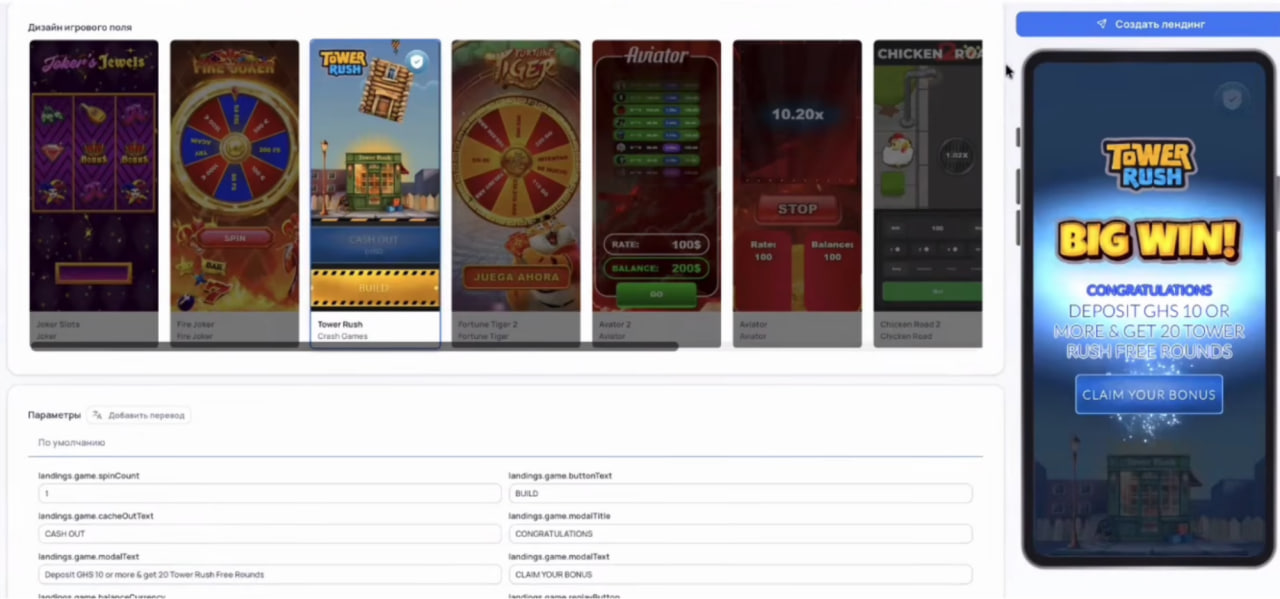
At the same time, this format retains the capabilities of PWAs. Progressive Web App technology continues to work in the background: while the player spins the reels on the site, a script quietly installs the app icon onto the smartphone's home screen in parallel. This boosts the initial conversion rate and allows for further re-engagement via push notifications.
Anatomy of a Slot Landing Funnel: From Click to First Deposit
The slot landing funnel relies on playing directly in the browser. Instead of a standard download page, the user arrives at an interactive slot (such as Sweet Bonanza or Big Bass) or a wheel of fortune. The user spins, sees a pop-up showing the awarded bonus, and proceeds to complete the registration form.
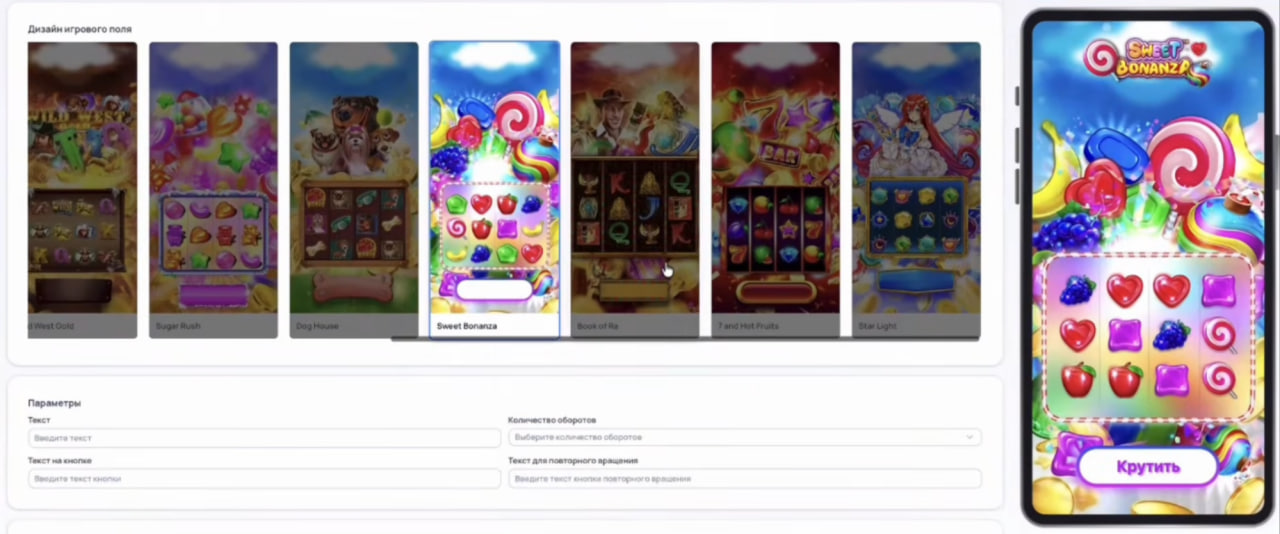
When configuring the landing page, you set the number of spins required before the bonus claim window appears. This parameter directly affects registration volume and the final percentage of deposits:
-
Single spin. The user makes one spin and immediately proceeds to the registration form. This option delivers the maximum click-to-registration conversion rate (CR).
-
Multiple spins. The user makes 2–3 spins to claim the bonus. The extra steps reduce the registration percentage, but filter out non-target audiences and increase the registration-to-first-time-deposit conversion rate (FTD).
To re-engage users who left the site without registering, push notifications are configured. Through tracker settings, the casino name, slot brand, and bonus amount in local currency are dynamically inserted into the message text.
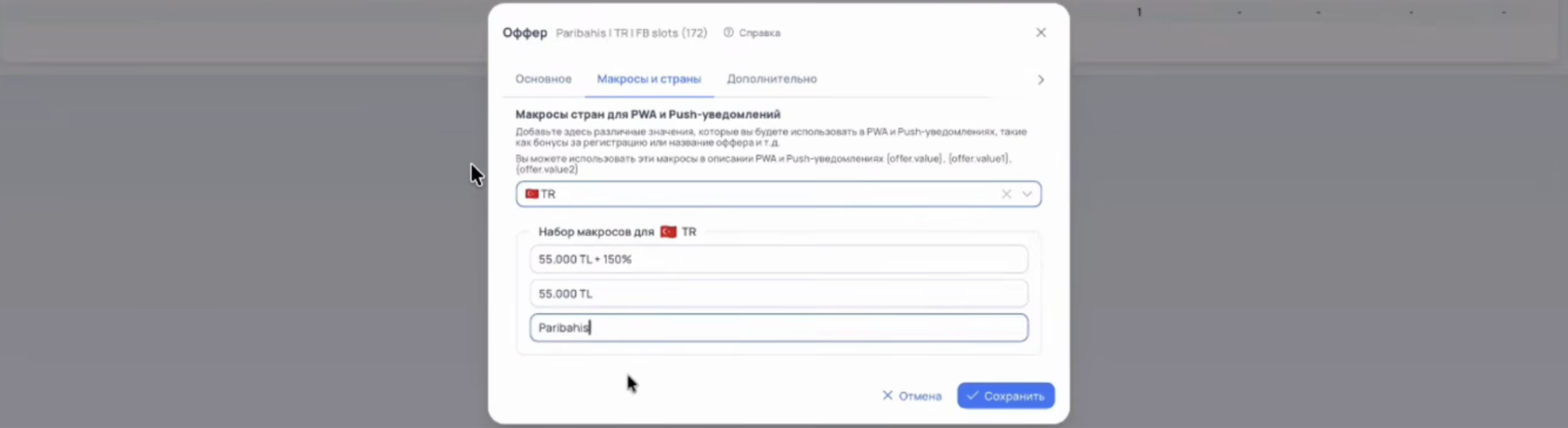
The user receives a notification with the exact same terms they saw while playing on the landing page, prompting them to return and complete registration.
Technical Specs: Speed, Hosting, and PWA Scripts
Interactive slot landings are significantly heavier than standard PWA landing pages. The page code incorporates graphic assets, reel spin animations, sound effects, and JS mechanics scripts.
If a page takes longer than 2–3 seconds to load, the user may simply close the tab before making their first spin. This is especially critical when running traffic to Tier-3 countries and regions with unstable mobile internet — such as India, Bangladesh, Nigeria, or Latin American countries.
To ensure instant page load times, files are compressed as much as possible, and the landing page is hosted on a CDN (Content Delivery Network). A CDN is a network of distributed servers worldwide. When a user from India clicks an ad, site files are loaded from the nearest local edge server rather than a European data center, allowing the page to open instantly.
In parallel with the gameplay, PWA technology works behind the scenes. A specialized script is embedded into the slot landing code in advance, triggering automatically as soon as the user follows the link.
Further operation of the funnel depends on the player's mobile operating system:
-
Android. While the user is spinning, the background script seamlessly downloads the application files and prompts them to add the casino icon to their phone's home screen.
-
iOS (iPhone). The Safari browser prevents background icon installation: the user must manually open the browser menu and select «Add to Home Screen». Consequently, on Apple devices, a slot landing functions like a standard web page, and audience re-engagement is handled through a standard push permission request.
Conclusion
Slot landings have become a fully-fledged alternative to traditional PWA applications, whose repetitive designs users have grown tired of. Giving the user a bonus directly in the browser eliminates extra friction points, leading to higher click-to-registration conversion rates.
However, this format requires thorough technical preparation. Without proper page optimization, CDN integration, and calibrated spin counts, you risk losing money due to slow loading speeds or low lead quality.
Testing slot landings in 2026 is definitely worth it, particularly when running gambling campaigns via Facebook Ads. The key is to monitor page load speeds closely and ensure that offer terms in ad creatives, landing pages, and push notifications match seamlessly.