TikTok Shop Bans AI Voices in Shopping Livestreams
TikTok Shop has updated the rules for sellers and content creators — now commercial streams cannot use AI voices, pre-recorded audio, or static frames. The ban came into effect in June 2026 and applies to all promotional livestreams and shopping videos.
What Exactly Is Banned
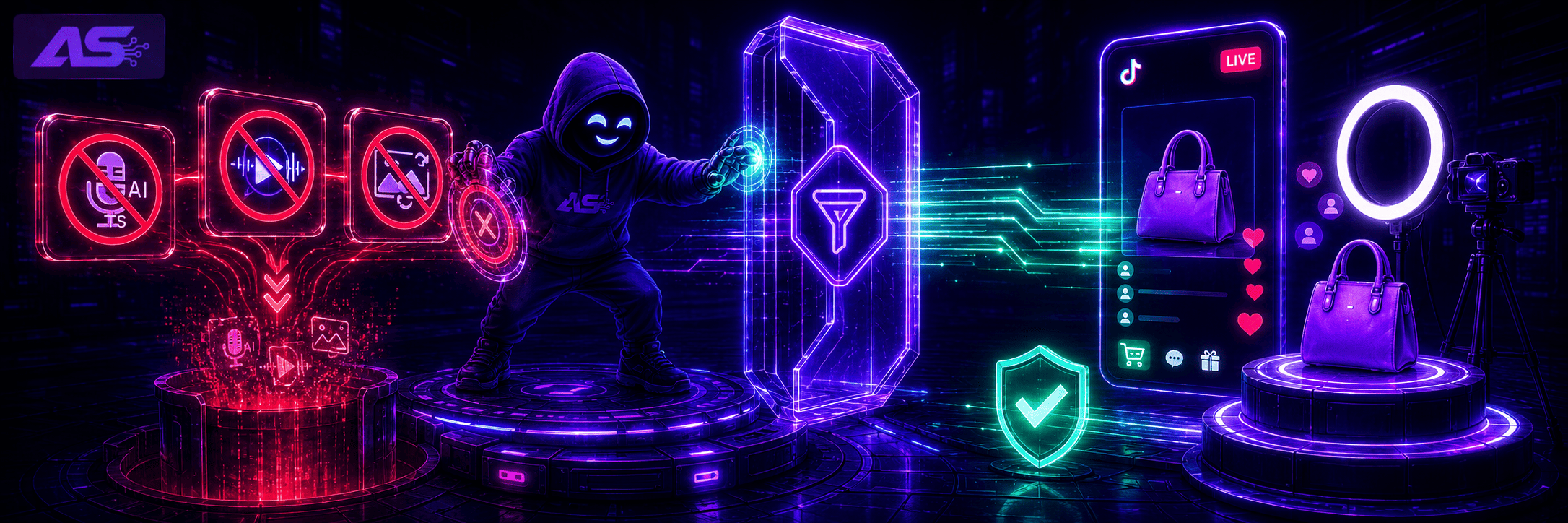
The platform updated the rules and added three categories of violations to the “Prohibited Content” section:
-
AI voices and Text-to-Speech. Any generated voices that replace a real person’s speech on camera. If the host is speaking but it is not their voice — the stream violates the rules.
-
Pre-recorded audio. Streams where pre-recorded text, radio broadcast, or third-party audio tracks play instead of live communication.
-
Static frames or looped video. Streams where more than 50% of the screen is occupied by slideshows, product card screenshots, or endless video loops without real-time product demonstration.
TikTok moderation has learned to automatically detect such streams and block them.
Consequences of Violating the New Rules
TikTok introduced a cumulative penalty system through the Creator Health Rating metric. Violations can result in:
-
Demotion in recommendations — the stream stops appearing in recommendations;
-
Forced disabling of the shopping cart;
-
Reduction of affiliate commission;
-
Full account ban in case of repeated violations.
TikTok does not ban AI completely. Neural networks are allowed at the production stage — for writing scripts, generating ideas, and creating short promo videos for the feed. The only condition is that such videos must have the #AIGC tag. However, AI cannot participate in direct interaction with buyers during a livestream.
What This Means for Those Working with TikTok Shop
The ban hits those who scaled sales through 24/7 automated streams without live hosts. Now such streams in the USA, UK, and Asia fall under moderation.
For those who run livestreams with real hosts, nothing changes. On the contrary — the platform is being cleared of automated content, which increases user trust in in-app purchases.