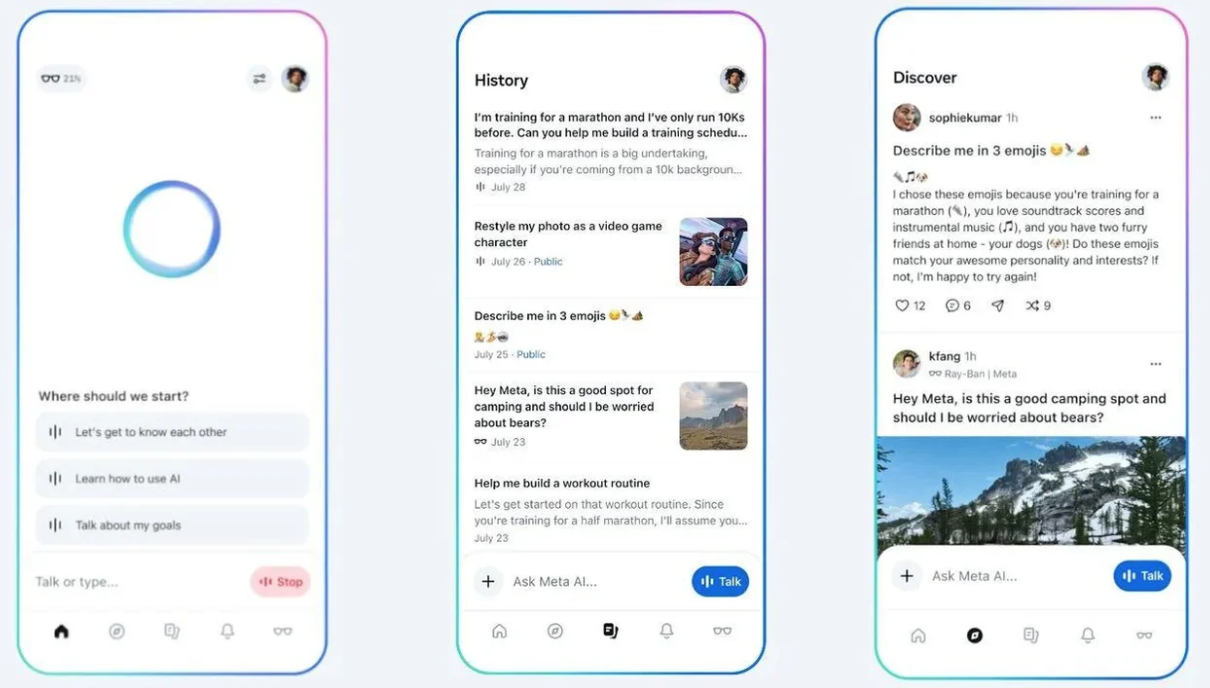
In September 2026, Meta rolled out not just another chatbot, but a full-fledged autonomous agent. Muse does not generate advice — it takes your account and physically handles routine tasks for you: fills out web forms, books tickets, manages correspondence, and pays for purchases.
For now, the release is available only to users aged 18+ in the US (iOS, Android, WhatsApp, and the web version at muse.ai).
How It Works Technically
-
Engine and autonomy. It runs on the latest multimodal Muse Spark 1.3 model, optimized for programming and multi-step tasks. The main feature: you set a goal, close the app, and the agent continues working in the background on a dedicated virtual machine.
-
Dual-control system. To prevent the AI from doing something it should not, Meta introduced Sentinel. This is a separate guardian agent that blocks any critical actions (sending emails, transferring money, publishing) and requires manual confirmation from a person. You remain in full control of all important decisions.
-
Secure payments. Muse does not have direct access to your bank cards. All commerce is handled through integration with Stripe Link. The service generates a one-time virtual card for each order. Bonus: such purchases are covered by Stripe’s own protection against fraud, returns, and lost packages.
Pricing and Integrations
There is a basic free version with strict limits. For those who want to load the agent with continuous tasks, there are subscriptions for $20 and $100 per month. At launch, Muse can connect to Gmail, Google Calendar, Spotify, OpenTable, and, of course, the Instagram/Facebook ecosystem. Where no API is available, it simply opens the built-in browser and clicks buttons like a regular user.
What It Means for the Market
Tech giants are officially shifting their focus. Text and image generation has become the baseline; now the race is for Actionable AI — agents capable of taking the user through the entire funnel from searching for a product to clicking the «Pay» button. Part of the customer journey is now physically handled not by a person, but by an algorithm, and businesses (especially in E-commerce) will have to learn how to sell not only to real people, but also to their personal bots.